Functional mushrooms have drawn growing scientific interest for their potential role in energy metabolism and physical performance. While no mushroom should be positioned as a substitute for sound nutrition or training, a body of research suggests that certain species may influence how the body produces and uses energy at the cellular level. This overview covers the most-studied candidates, what the evidence shows, and how the research quality varies across species.
Why Mushrooms and Energy? The Biological Framework
The interest in mushrooms and energy production largely centers on a few biochemical mechanisms: adenosine and cordycepin content (which interact with purinergic signaling and ATP metabolism), beta-glucan-mediated effects on mitochondrial function, adaptogenic properties that may reduce the physiological cost of stress, and oxygen utilization efficiency. Different species engage these pathways to varying degrees, which is why the species comparison matters.
Cordyceps: The Most-Studied Mushroom for Physical Performance
Cordyceps militaris and Ophiocordyceps sinensis are consistently the most investigated functional mushrooms in the context of exercise capacity and energy. Cordycepin, a naturally occurring adenosine analog isolated from C. militaris, has been shown in laboratory studies to affect mitochondrial membrane potential and ATP content in muscle cells.[1] This cellular mechanism has informed much of the hypothesis around Cordyceps as an ergogenic aid.
A 2026 narrative review published in Nutrients systematically evaluated five human intervention studies involving 321 participants and found that while some trials reported improvements in selected aerobic performance markers such as VO2 peak, time to exhaustion, and peripheral oxygen saturation, results were inconsistent across trials. The review concluded that well-designed randomized controlled trials using chemically characterized preparations are needed before firm conclusions can be drawn.[2]
A separate placebo-controlled study examining a commercial supplement combining O. sinensis and Ganoderma lucidum in 96 physical education students found no significant differences in VO2max, anaerobic power, or fatigue index after 28 to 33 days of supplementation compared to placebo.[3] This underscores that the existing evidence is mixed rather than uniformly positive.
Where the Evidence Is Strongest
The most favorable human data for Cordyceps tends to come from studies involving recreational athletes or sedentary adults rather than highly trained individuals, with supplementation protocols lasting at least four to eight weeks. Studies using multi-ingredient formulas (often combining Cordyceps with rhodiola) complicate attribution to the mushroom alone.
Reishi (Ganoderma lucidum): Adaptogenic Support Rather Than Stimulant
Reishi’s relationship with energy is indirect compared to Cordyceps. Rather than stimulating cellular energy production directly, research on Ganoderma lucidum polysaccharides suggests anti-fatigue activity through multiple pathways: modulating inflammatory cytokines, supporting mitochondrial function, and reducing oxidative stress. A comprehensive review of G. lucidum polysaccharides noted anti-fatigue effects among the documented biological activities, alongside immune modulation and antioxidant properties.[4]
Reishi is better characterized as an adaptogen that may reduce the physiological burden of stress and improve stress resilience, which can translate to subjective reductions in fatigue over time. It is not a stimulant and does not act through caffeine-like mechanisms. For a broader perspective on how Reishi compares with Lion’s Mane for general wellness, see Lion’s Mane vs Reishi: Which Mushroom Is Right for You?
Lion’s Mane (Hericium erinaceus): Cognitive Energy Over Physical
Hericium erinaceus does not have a meaningful direct body of evidence for physical performance or ATP metabolism. Its relevance to energy in the popular literature typically refers to mental energy, focus, and cognitive function, driven by its documented effects on nerve growth factor (NGF) synthesis. Research on fatigue-related outcomes for Lion’s Mane specifically has not produced the same volume of exercise-focused trials seen with Cordyceps. Its potential contribution to an energy-support protocol would be through cognitive clarity and reduced mental fatigue rather than aerobic capacity or physical output.
Chaga (Inonotus obliquus): Antioxidant Defense and Indirect Recovery
Chaga is not well-studied in the context of energy performance specifically. Its primary documented biological activities involve antioxidant and immunomodulatory effects, driven by high levels of melanin, betulinic acid derivatives, and polysaccharides. The theoretical connection to energy lies in reducing oxidative damage during exercise, potentially supporting faster recovery. However, direct human clinical evidence for Chaga and exercise performance is sparse, and the available literature is largely preclinical.
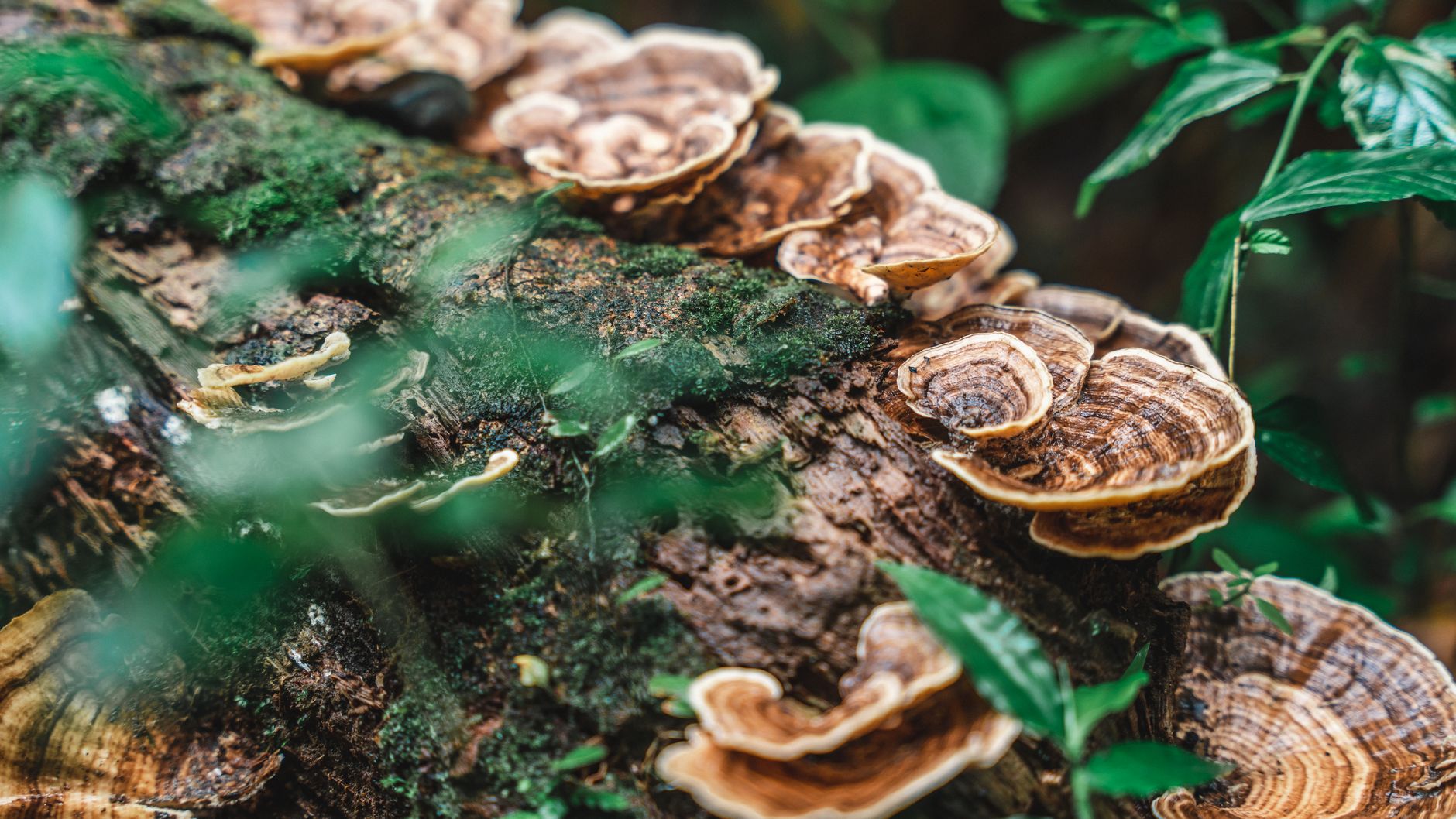
Turkey Tail (Trametes versicolor): Gut-Mediated Metabolic Effects
Turkey Tail is primarily studied for its immune-modulating polysaccharopeptides PSP and PSK, and for prebiotic effects on the gut microbiome. There is limited direct evidence connecting Turkey Tail to energy production or physical performance. However, given that gut microbiome composition influences nutrient absorption, mitochondrial function, and systemic inflammation, Turkey Tail’s prebiotic activity represents an indirect pathway relevant to metabolic energy over time. This remains a theoretical connection in humans rather than a demonstrated performance effect.
How to Think About This Category
The strongest research profile for mushrooms and energy currently belongs to Cordyceps, though even that evidence base has significant limitations in study quality and consistency. The table below summarizes how each species ranks by evidence type:
- Cordyceps militaris / sinensis: Most human trial data; mixed results; strongest signal in aerobic capacity markers in some trials
- Reishi (Ganoderma lucidum): Indirect anti-fatigue evidence; adaptogenic; no direct performance enhancement shown in controlled trials
- Lion’s Mane: Cognitive energy; no meaningful data on physical performance
- Chaga: Antioxidant support; preclinical data only for exercise-related outcomes
- Turkey Tail: Gut/immune focused; no direct energy performance data
What to Look for in a Supplement
Research suggests that the form and standardization of the mushroom extract matters for any bioactive effect. Products specifying beta-glucan percentage, using hot water or dual extraction, and providing a Certificate of Analysis are more likely to contain levels of active compounds consistent with those used in research settings. Multi-ingredient formulas that combine Cordyceps with other compounds complicate interpreting which ingredient is driving any effect observed.
References
- 1. Cheng C, et al. Cordycepin inhibits myogenesis via activating the ERK1/2 MAPK signalling pathway in C2C12 cells. Biomed Pharmacother. 2023;165:115163. PMID: 37453196
- 2. Jedrejko M, et al. Current Evidence of Ergogenic and Post-Exercise Recovery Effects of Dietary Supplementation with Cordyceps militaris in Humans. Nutrients. 2026;18(5):781. PMID: 41829950
- 3. Tsuk S, et al. Effects of a Commercial Supplement of Ophiocordyceps sinensis and Ganoderma lucidum on Physiological Responses to Maximal Exercise. Int J Med Mushrooms. 2018;20(4):359-367. PMID: 29953396
- 4. Ding L, et al. Extraction, purification, structural characterization, biological activity, mechanism of action and application of polysaccharides from Ganoderma lucidum: A review. Int J Biol Macromol. 2025;288:138575. PMID: 39662574
Disclaimer: This article is for informational purposes only and does not constitute medical advice. Functional mushroom supplements have not been evaluated by the FDA for the diagnosis, treatment, cure, or prevention of any disease. Consult a qualified healthcare provider before starting any new supplement, especially if you have a medical condition or take medications.