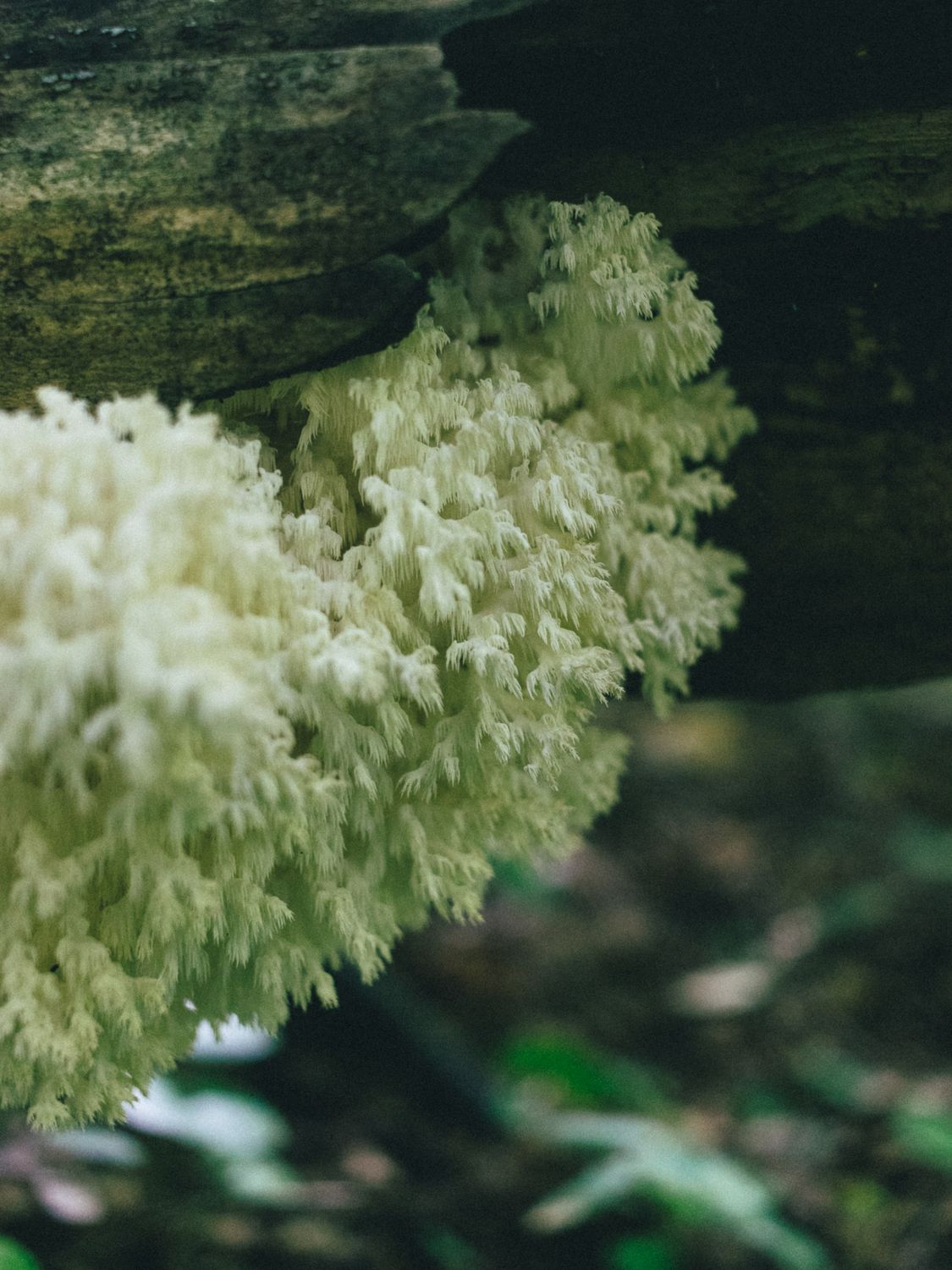
Lion’s mane mushroom (Hericium erinaceus) has attracted serious scientific attention over the past two decades, largely because of its unusual chemistry. Unlike most functional mushrooms, which are studied primarily for immune-related polysaccharides, lion’s mane contains two classes of small lipid-soluble molecules, hericenones and erinacines, that have been shown in laboratory settings to stimulate the synthesis of nerve growth factor (NGF). This mechanism sets it apart as a candidate for supporting cognitive function during aging, and a growing body of preclinical and clinical research is beginning to define how meaningful that distinction may be.
What Are Hericenones and Erinacines?
Hericenones are compounds found primarily in the fruiting body of lion’s mane. Erinacines are diterpenoid compounds concentrated in the mycelium. Both classes have been shown to cross the blood-brain barrier and stimulate NGF synthesis in neuronal cell cultures. NGF is a protein critical to the survival, maintenance, and growth of neurons, and its decline has been linked to age-related cognitive deterioration and conditions such as Alzheimer’s disease.
Erinacine A, in particular, has been the subject of several animal studies examining its effects on neurodegeneration. Research using a transgenic mouse model of Alzheimer’s disease found that oral administration of erinacine A-enriched Hericium erinaceus mycelium was associated with a reduced amyloid plaque burden in the cerebral cortex and hippocampus. The same study observed elevated ratios of NGF to its precursor protein (proNGF) and enhanced hippocampal neurogenesis in treated animals compared with controls.[1]
The 2009 Human Clinical Trial
One of the most frequently cited studies on lion’s mane and human cognition is a double-blind, placebo-controlled trial published in Phytotherapy Research. The trial enrolled 30 adults aged 50 to 80 with diagnosed mild cognitive impairment. Participants in the treatment group took tablets containing dried Hericium erinaceus powder three times daily for 16 weeks. At weeks 8, 12, and 16, cognitive function scores on the Revised Hasegawa Dementia Scale were significantly higher in the treatment group compared with the placebo group. Scores declined after the supplementation period ended, and no adverse effects were reported in laboratory testing.[2]
This study is limited in scale, and it was conducted in a Japanese population with a specific cognitive impairment diagnosis, which limits how broadly its findings can be applied. Still, it remains one of the few human trials using a validated cognitive assessment tool, and it provides a basis for further clinical investigation.
Erinacine A and Metabolic Contexts of Cognitive Decline
Cognitive aging does not occur in isolation. Metabolic factors, including elevated blood glucose and increased adiposity, are associated with neuroinflammation and accelerated cognitive decline. A 2019 animal study examined whether Hericium erinaceus mycelium and isolated erinacine A could address both metabolic dysfunction and spatial learning deficits in aging mice fed a high-fat, high-sucrose diet.
The study used Morris water maze and Y-maze tests to assess spatial memory. Both the mushroom mycelium and isolated erinacine A treatment groups showed improved escape latency performance compared with untreated high-fat-diet controls. Gene expression analysis indicated reduced inflammatory markers and increased NGF and NeuN expression in hippocampal tissue. Metabolic outcomes, including reduced body weight, plasma glucose, and liver lipids, were also observed in treated animals.[3]
These findings suggest that the cognitive-related activity of lion’s mane mycelium may be relevant in contexts where metabolic and neurological health intersect, though human trials under similar conditions have not yet been conducted.
Fruiting Body vs. Mycelium: Does the Source Matter?
The distinction between lion’s mane fruiting body and mycelium extracts matters more for this mushroom than for most. Hericenones are concentrated in the fruiting body, while erinacines, including the well-studied erinacine A, are found primarily in the mycelium. Most commercially available lion’s mane supplements use the fruiting body, which contains hericenones but lower concentrations of erinacines.
Some products combine both, or use mycelium biomass specifically to increase erinacine content. When reviewing supplements for cognitive support purposes, the source material and extraction method are worth examining closely. A product’s beta-glucan percentage, often listed on the label, reflects immune-related polysaccharide content and does not directly indicate hericenone or erinacine levels. For more on decoding supplement labels, see Lion’s Mane and Alzheimer’s: What Science Says So Far.
What the Research Does and Does Not Support
Current evidence suggests that lion’s mane extracts, particularly those containing erinacines or hericenones, may support neuronal health through NGF stimulation pathways. Animal models have demonstrated effects on amyloid plaque burden, neuroinflammation, and spatial memory performance. One human clinical trial supports a potential benefit for mild cognitive impairment specifically, with effects appearing to require sustained supplementation and diminishing after discontinuation.
What the research does not yet support is a direct claim that lion’s mane prevents or reverses dementia in humans, improves cognition in healthy adults, or that any particular commercial product replicates the doses and preparations used in research settings. Larger and more diverse human trials are needed before those conclusions can be drawn.
Practical Considerations
Lion’s mane is generally regarded as safe, with no significant adverse effects reported in clinical literature at doses examined to date. It is available in capsule, powder, and liquid extract forms, and as both fruiting body and mycelium preparations. Individuals using medications that affect the nervous system or those managing cognitive conditions should speak with a healthcare provider before beginning any new supplement.
Research on lion’s mane and cognitive aging is still developing. The existing literature, while encouraging, primarily reflects animal models and small-scale human trials. As a functional mushroom with a distinct and well-characterized neurochemistry, lion’s mane remains one of the more scientifically interesting options for those interested in supporting brain health through supplementation, provided expectations are grounded in what the evidence currently shows.
References
- Tsai-Teng T, et al. Erinacine A-enriched Hericium erinaceus mycelium ameliorates Alzheimer’s disease-related pathologies in APPswe/PS1dE9 transgenic mice. J Biomed Sci. 2016;23(1):49. PMID: 27350344
- Mori K, et al. Improving effects of the mushroom Yamabushitake (Hericium erinaceus) on mild cognitive impairment: a double-blind placebo-controlled clinical trial. Phytother Res. 2009;23(3):367-72. PMID: 18844328
- Tsai YC, et al. Hericium erinaceus Mycelium and Its Isolated Compound, Erinacine A, Ameliorate High-Fat High-Sucrose Diet-Induced Metabolic Dysfunction and Spatial Learning Deficits in Aging Mice. J Med Food. 2019;22(5):469-478. PMID: 31084539
Disclaimer: This article is for informational purposes only and does not constitute medical advice. The statements in this article have not been evaluated by the Food and Drug Administration. Functional mushroom supplements are not intended to diagnose, treat, cure, or prevent any disease. Consult a qualified healthcare provider before beginning any supplement regimen, particularly if you have an existing medical condition or are taking medications.