Walk into any health food store and the mushroom supplement section can feel overwhelming. Dozens of products line the shelves, each with slightly different language on the label. Terms like “beta-glucans,” “polysaccharides,” “fruiting body,” and “mycelium” appear frequently, yet few labels explain what these terms actually mean or why they matter. Understanding how to read a mushroom supplement label can help you make a more informed purchasing decision and better evaluate the research behind any product you consider.
What Are Polysaccharides?
Polysaccharides are long-chain carbohydrate molecules composed of repeating sugar units linked together. In functional mushrooms, polysaccharides are among the primary bioactive compounds studied for their potential health effects. They are found in the cell walls and fruiting bodies of mushroom species and vary considerably in their molecular structure depending on the species and how the mushroom was grown or processed.
Not all polysaccharides are equal. Their biological activity depends on factors including molecular weight, branching pattern, and the specific sugar units involved. Research suggests that these structural differences influence how the body responds to them, which is why the presence of polysaccharides on a label alone does not necessarily indicate quality or potency.[1]
Beta-Glucans: The Most Studied Fraction
Beta-glucans are a specific class of polysaccharides characterized by glucose units connected by beta-glycosidic bonds. The most biologically relevant beta-glucans in mushroom supplements contain beta-1,3 and beta-1,6 linkages. These structural features appear to be important for how the body processes them.
Studies indicate that beta-glucans from mushrooms interact with immune receptors on the surface of immune cells. In particular, the Dectin-1 receptor recognizes beta-1,3/1,6-glucan structures, and this interaction may activate downstream immune signaling pathways. Research also suggests that beta-glucans may interact with Toll-like receptors, contributing to their potential immunomodulatory effects.[2]
It is worth noting that not every polysaccharide in a mushroom supplement is a beta-glucan. Alpha-glucans, for example, are also polysaccharides but have a different glycosidic bond structure. They are commonly found in grain-based fillers, such as the rice or oats used in mycelium-on-grain cultivation methods. A total polysaccharide percentage that includes significant alpha-glucan content may not reflect the same biological relevance as a product with verified beta-glucan content.
Fruiting Body vs. Mycelium on Grain
One of the most important distinctions on a mushroom supplement label is whether the product is derived from the fruiting body, the mycelium, or both. This distinction has meaningful implications for beta-glucan content.
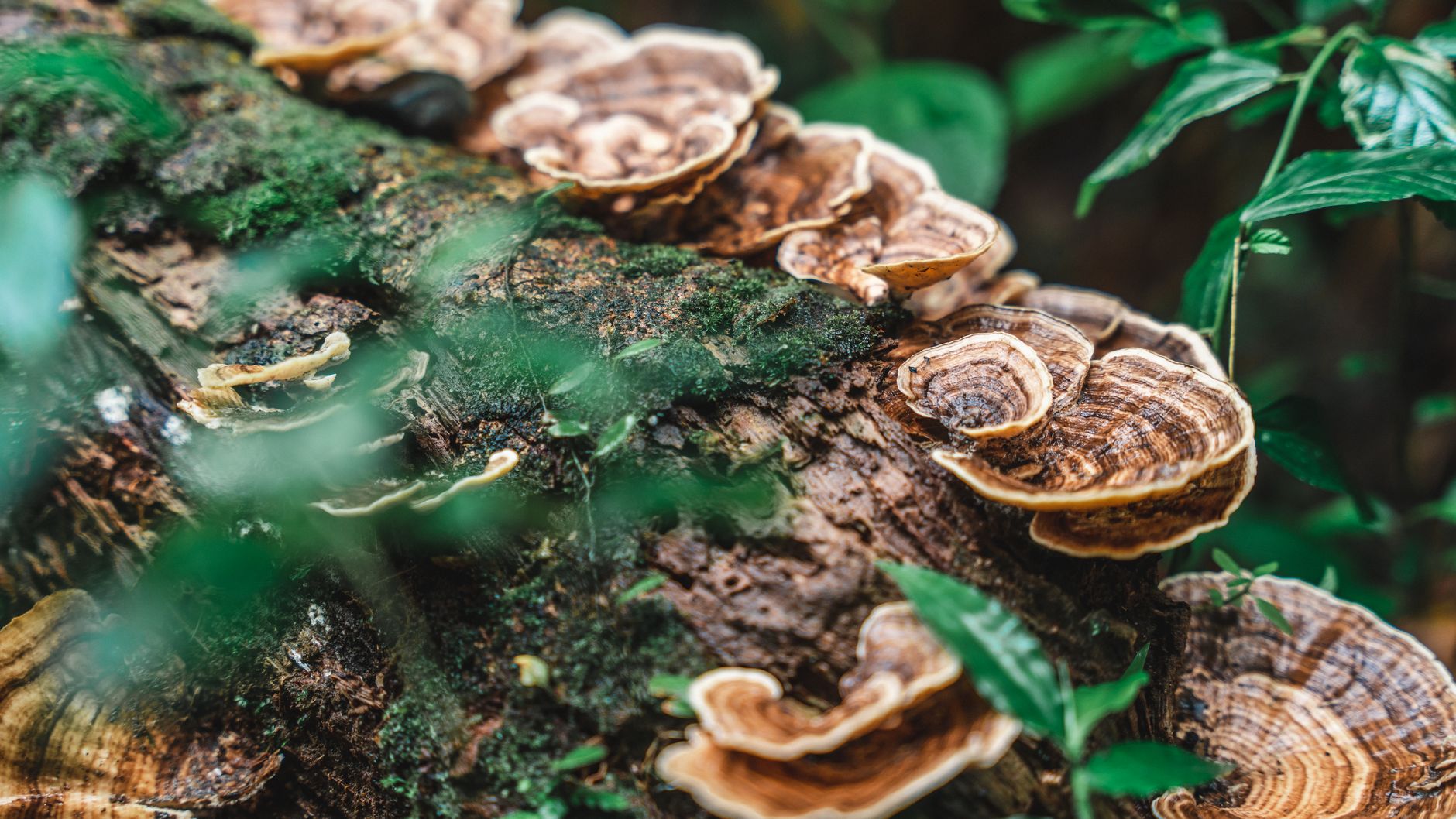
The fruiting body is the visible mushroom structure, the cap and stem, while mycelium is the root-like network of filaments. Some supplement manufacturers grow mycelium on a grain substrate such as brown rice or oats and then grind the entire substrate into powder. This approach can be more cost-effective, but the resulting powder contains substantial amounts of grain starch, which contributes to total polysaccharide counts without necessarily contributing to beta-glucan activity.
Fruiting body extracts, when standardized to a specific beta-glucan content, tend to reflect a higher concentration of the compounds that have been studied in the research literature. However, some research suggests that certain mycelial exopolysaccharides also exhibit immunomodulatory properties, and the science on this comparison continues to develop.
When evaluating a product, look for labels that specify the source (fruiting body, mycelium, or a defined ratio of both) and, where possible, identify the percentage of beta-glucans specifically, not just total polysaccharides.
Understanding Extracts and Extraction Ratios
Mushroom supplements commonly use the term “extract” alongside a ratio such as 8:1 or 10:1. These ratios refer to how much raw mushroom material was used to produce one part of the final extract. A 10:1 extract means that ten kilograms of raw mushroom were concentrated into one kilogram of extract powder.
While a higher extraction ratio can suggest greater concentration, it does not automatically indicate higher quality. What matters more is whether the extract has been standardized to a known percentage of active compounds, particularly beta-glucans. A label that states “standardized to 30% beta-glucans” provides more actionable information than an extraction ratio alone.
Dual-extraction products, particularly common with Chaga and Reishi, indicate that both water-soluble and alcohol-soluble compounds have been extracted. Water extraction captures polysaccharides and beta-glucans, while alcohol (ethanol) extraction captures triterpenoids and other fat-soluble compounds. A dual-extract may be more appropriate when seeking a broader spectrum of bioactive compounds from a given species.
Other Label Terms Worth Knowing
Chitin
Chitin is a structural polysaccharide found in mushroom cell walls. It is largely indigestible by humans. Some researchers have raised questions about whether high chitin content in non-extracted mushroom powders may limit the bioavailability of other bioactive compounds, though this remains an area of ongoing research.
Triterpenes and Ganoderic Acids
These terms appear most commonly on Reishi labels. Triterpenes are a class of secondary metabolites associated with some of the adaptogenic properties attributed to Reishi in the research literature. Products that specify a percentage of total triterpenes or ganoderic acids provide clearer information about this fraction of the extract.
Hericenones and Erinacines
These compounds are specific to Lion’s Mane and are associated in preclinical research with nerve growth factor (NGF) stimulation. Hericenones are typically found in the fruiting body, while erinacines are found in the mycelium. A product derived entirely from the fruiting body may not contain appreciable erinacine levels, and vice versa.
Lentinan
Lentinan is a specific beta-1,3-glucan derived from shiitake mushrooms (Lentinula edodes). It activates the Dectin-1 receptor and has been studied extensively for its immunomodulatory properties, particularly in oncology research contexts. When present on a label, it indicates that shiitake-derived beta-glucans have been identified and measured.[3]
Third-Party Testing and Transparency
Because the mushroom supplement market is not uniformly regulated, third-party testing provides one of the more reliable signals of label accuracy. Certificates of Analysis (COAs) from independent laboratories can verify beta-glucan percentages, confirm the absence of heavy metals, pesticides, or microbial contaminants, and validate that a product contains what its label claims.
Reputable manufacturers typically make COAs available on request or directly through their websites. A label that references third-party testing without providing access to the underlying documentation is less informative than one accompanied by accessible, dated test reports.
For a broader perspective on how mushroom supplements may interact with medications or other compounds, see our overview of Mushroom Supplements and Drug Interactions: What to Know Before You Start.
A Practical Checklist
When reviewing a mushroom supplement label, the following questions may help guide your evaluation:
- Does the label specify fruiting body, mycelium, or both?
- Is a beta-glucan percentage listed separately from total polysaccharides?
- Is the extract standardized, and if so, to what percentage?
- Is dual extraction specified for species where triterpenoids are relevant (e.g., Reishi, Chaga)?
- Are third-party COAs accessible?
- Is the mushroom species identified by its Latin binomial (e.g., Ganoderma lucidum, Hericium erinaceus)?
No single label feature guarantees clinical efficacy. Research on functional mushroom supplements remains active, and human clinical data is still limited for many species and formulations. Labels that reflect transparency about sourcing, standardization, and testing provide a better starting point for evaluation than marketing claims alone.
References
- 1. Mattioli LB, et al. Edible Mushrooms as Emerging Prebiotic Sources: Gut Microbiota Modulation and SCFA-Mediated Health Effects. Foods. 2026;15(9):1539.
- 2. Wang X, et al. Harnessing beta-glucans for immune regulation: Bridging structural diversity, therapeutic potential, and functional food development. Carbohydr Polym. 2026;372:124554.
- 3. Zhen C, et al. Comprehensive mechanisms and advanced delivery strategies of lentinan in antitumor therapy. Colloids Surf B Biointerfaces. 2026;258:115228.
Disclaimer: The information on this page is for educational purposes only and does not constitute medical advice. Functional mushroom supplements are not intended to diagnose, treat, cure, or prevent any disease. Consult a qualified healthcare provider before beginning any new supplement regimen.