Gut health has become one of the most active areas in nutritional science, with researchers increasingly focusing on how dietary compounds shape the composition and function of the intestinal microbiome. Among the many food sources under investigation, functional mushrooms have emerged as a particularly compelling category. Their complex polysaccharides, beta-glucans, and other bioactive compounds resist standard digestive processes and arrive largely intact in the colon, where they may interact with gut bacteria in ways that influence both local and systemic health.
This article reviews the current evidence on how specific functional mushrooms may support gut health, focusing on their prebiotic potential and immune-modulating effects in the gastrointestinal tract.
Why the Gut Microbiome Matters
The human gut hosts trillions of microorganisms that collectively influence digestion, immune function, metabolic regulation, and even neurological signaling via the gut-brain axis. Diet is one of the most significant modulators of microbial composition. Prebiotics, broadly defined as compounds that selectively feed beneficial bacteria, have received particular attention for their role in shaping a healthy microbial environment.
Functional mushrooms contain several classes of compounds with prebiotic-like properties. Chief among these are beta-glucans, long-chain polysaccharides with a glucose backbone that human enzymes cannot fully break down. Research indicates these compounds may be fermented by colonic bacteria, promoting the growth of beneficial taxa and stimulating the production of short-chain fatty acids (SCFAs) such as butyrate, propionate, and acetate. SCFAs serve as energy substrates for colonocytes, support intestinal barrier integrity, and carry anti-inflammatory signaling properties.[1]
Turkey Tail and Its Prebiotic Evidence
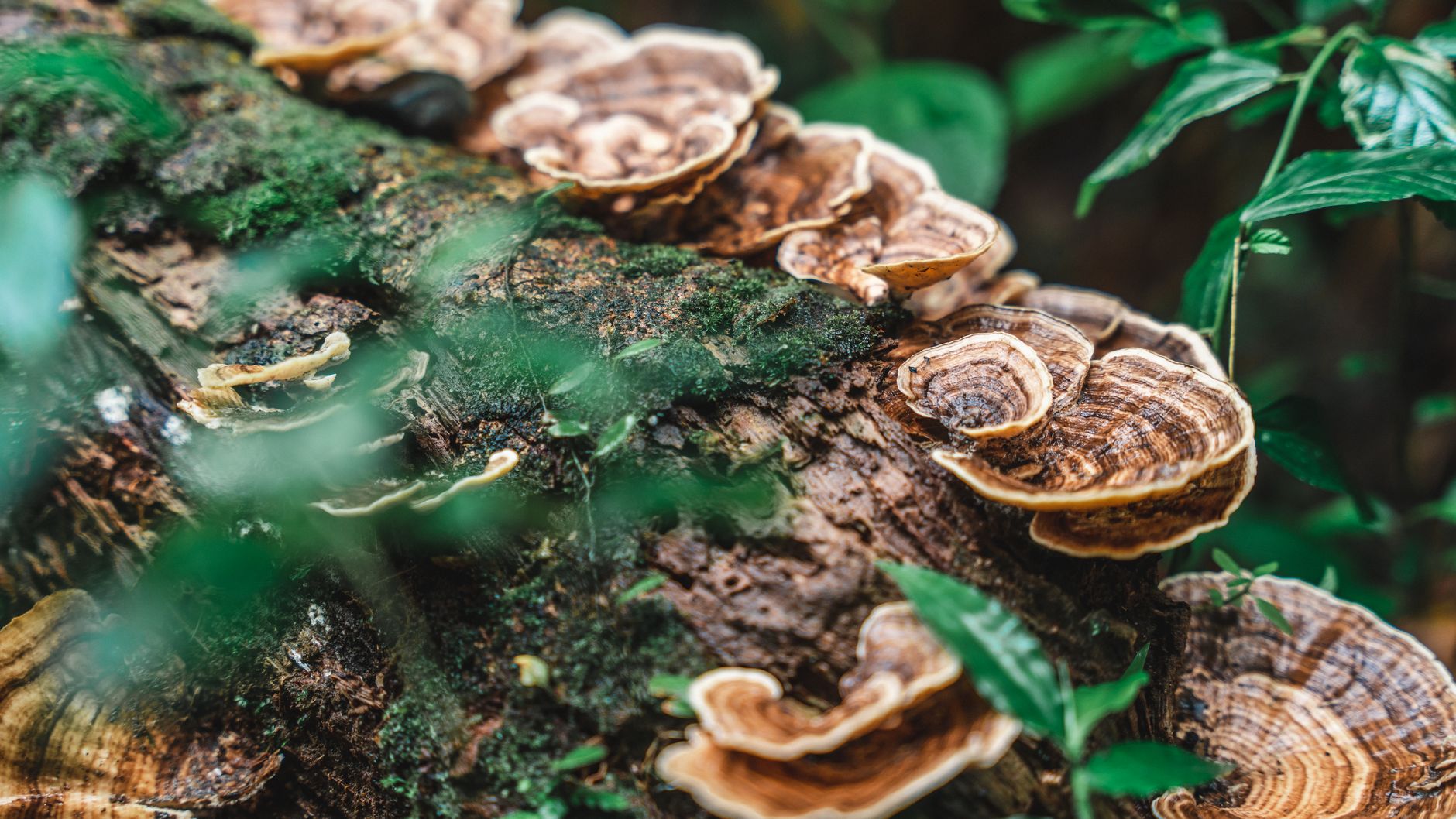
Turkey tail (Trametes versicolor) is among the best-studied functional mushrooms for gut health. It is a rich source of polysaccharopeptide (PSP) and polysaccharide-K (PSK), both of which have been examined in human clinical settings.
A randomized clinical trial published in Gut Microbes compared the effects of PSP from T. versicolor to those of the antibiotic amoxicillin on the gut microbiome of healthy adults. PSP supplementation led to consistent microbiome changes characterized as prebiotic in nature, including shifts toward beneficial microbial communities. In contrast, amoxicillin treatment caused substantial disruption that persisted for weeks after the course ended. The study concluded that PSP from turkey tail acts as a prebiotic to modulate human intestinal microbiome composition.[2]
Turkey tail’s immune-modulating properties in the gut are thought to be linked to its interaction with gut-associated lymphoid tissue (GALT), the extensive immune network that lines the intestinal wall. PSK in particular has been studied for its immunomodulatory effects, and its oral administration is believed to stimulate immune responses partly through intestinal immune cells.
Shiitake: Beta-Glucans and Butyrate-Producing Bacteria
Shiitake (Lentinula edodes) is one of the most widely consumed edible mushrooms globally, and emerging research suggests its health effects extend well beyond its nutritional profile. A 2026 review in Comprehensive Reviews in Food Science and Food Safety examined the macromolecular organization of shiitake’s bioactive compounds, including its beta-(1,3)(1,6)-glucans and heteropolysaccharides, in relation to gut microbiota outcomes.
The review found that across experimental systems, shiitake polysaccharides were associated with shifts in gut microbial composition, including enrichment of butyrate-producing and mucin-associated taxa such as Faecalibacterium, Roseburia, Akkermansia, and Bifidobacterium. These changes were often accompanied by altered SCFA profiles. The authors noted that biological effects are better interpreted within the whole food matrix rather than through single-compound approaches, underscoring the complexity of how shiitake interacts with the gut environment.[3]
Lion’s Mane and Gastroprotective Properties
Lion’s mane (Hericium erinaceus) has historically been used in traditional medicine for gastrointestinal complaints, and modern research is beginning to provide mechanistic support for this traditional use. A 2026 study in Food Science and Nutrition investigated how lion’s mane extract affected gut microbiota composition and metabolic profiles in a model of acute gastric injury.
The researchers found that lion’s mane extract alleviated gastric injury markers and enriched SCFA-producing bacteria in the gut. Notably, a water extract additionally elevated propionic acid levels, a beneficial SCFA. These SCFA-producing bacteria were positively correlated with propionic acid and negatively correlated with inflammatory mediators, suggesting a gut microbiota-metabolite axis may contribute to lion’s mane’s gastroprotective properties.[4]
For those interested in lion’s mane’s broader gastrointestinal applications, see our detailed coverage of Lion’s Mane and Inflammatory Bowel Conditions.
Reishi and Other Functional Mushrooms
Reishi (Ganoderma lucidum) and chaga (Inonotus obliquus) have also been studied for gut-related effects, though the evidence base is less robust than for turkey tail and shiitake. Reishi polysaccharides have demonstrated the capacity to modulate gut microbiota composition in preclinical models, typically favoring short-chain fatty acid-producing taxa and reducing microbial dysbiosis markers associated with metabolic conditions. Chaga, rich in beta-glucans and melanin-related compounds, has shown anti-inflammatory effects in gut tissue in animal studies, though well-controlled human data remain limited.
Maitake (Grifola frondosa) contributes its own beta-glucan fraction, while oyster mushroom (Pleurotus ostreatus) contains dietary fiber and polysaccharides that may similarly support microbial diversity. Across species, the common thread appears to be the structural complexity of mushroom-derived polysaccharides and their resistance to upper gastrointestinal digestion, which positions them as substrates for colonic fermentation.
Key Bioactive Compounds to Understand
When evaluating functional mushrooms for gut health, several compound classes are relevant:
Beta-Glucans
The primary prebiotic candidate across most functional mushroom species. Their specific linkage structure (beta-1,3 and beta-1,6 bonds) determines how readily gut bacteria can ferment them. Higher-molecular-weight, branched beta-glucans tend to be more resistant to digestion and thus more available for colonic fermentation.
Chitin
The structural polymer forming mushroom cell walls. Like dietary fiber, chitin resists human digestive enzymes and may serve as a substrate for certain gut bacteria. Research into its prebiotic properties is ongoing.
Polysaccharopeptides
As seen with turkey tail’s PSP, protein-bound polysaccharides represent a distinct bioactive class with well-documented interactions with gut microbial communities and immune tissue in the gut wall.
Important Considerations
Most of the mechanistic research on mushrooms and gut health has been conducted in vitro or in animal models. Human clinical trials remain limited in number, size, and duration. Individual responses to prebiotic compounds can vary considerably based on existing microbiome composition, diet, and health status.
Supplement quality also matters significantly. Products using hot-water extraction are more likely to yield soluble polysaccharides, while products composed primarily of mycelium on grain may contain more starch than bioactive mushroom compounds. Evaluating beta-glucan content and extraction method on product labels may help identify higher-quality options.
Anyone with inflammatory bowel conditions, immunocompromising conditions, or who takes immunosuppressive medications should consult a healthcare provider before incorporating functional mushroom supplements, as immune-modulating effects could potentially interact with treatment regimens.
Summary
Functional mushrooms represent a genuinely promising area for gut health research. Turkey tail’s PSP has the strongest direct clinical evidence as a prebiotic compound in humans. Shiitake’s polysaccharides appear to selectively enrich butyrate-producing bacteria in experimental systems. Lion’s mane has emerging evidence for gastroprotective effects mediated through the gut microbiota-metabolite axis. Across all species, the prebiotic mechanism centers on the resistance of complex polysaccharides to upper-gut digestion and their subsequent fermentation in the colon.
As the science matures and more standardized human trials are completed, clearer dosing guidance and species-specific recommendations for gut health applications are likely to emerge. For now, these mushrooms appear to offer a food-derived approach to supporting microbial diversity and intestinal immune function.
References
- 1. Mattioli LB et al. Edible Mushrooms as Emerging Prebiotic Sources: Gut Microbiota Modulation and SCFA-Mediated Health Effects. Foods. 2026;15(9):1539. PMID: 42121482
- 2. Pallav K et al. Effects of polysaccharopeptide from Trametes versicolor and amoxicillin on the gut microbiome of healthy volunteers: a randomized clinical trial. Gut Microbes. 2014;5(4):458-67. PMID: 25006989
- 3. Makkar S et al. Macromolecular Organization in Lentinula edodes: Integrating Co-Occurring Bioactives for Structure-Function Relationships Across Gut Microbiota and Host Metabolism. Compr Rev Food Sci Food Saf. 2026;25(4):e70536. PMID: 42316508
- 4. Bei R et al. Hericium erinaceus Extracts Exert Gastroprotective Effects Through Modulation of the Gut Microbiota and Metabolites. Food Sci Nutr. 2026;14:e71851. PMID: 42125535
Disclaimer: This article is for informational purposes only and does not constitute medical advice. Functional mushroom supplements are not intended to diagnose, treat, cure, or prevent any disease. Consult a qualified healthcare provider before starting any new supplement regimen.