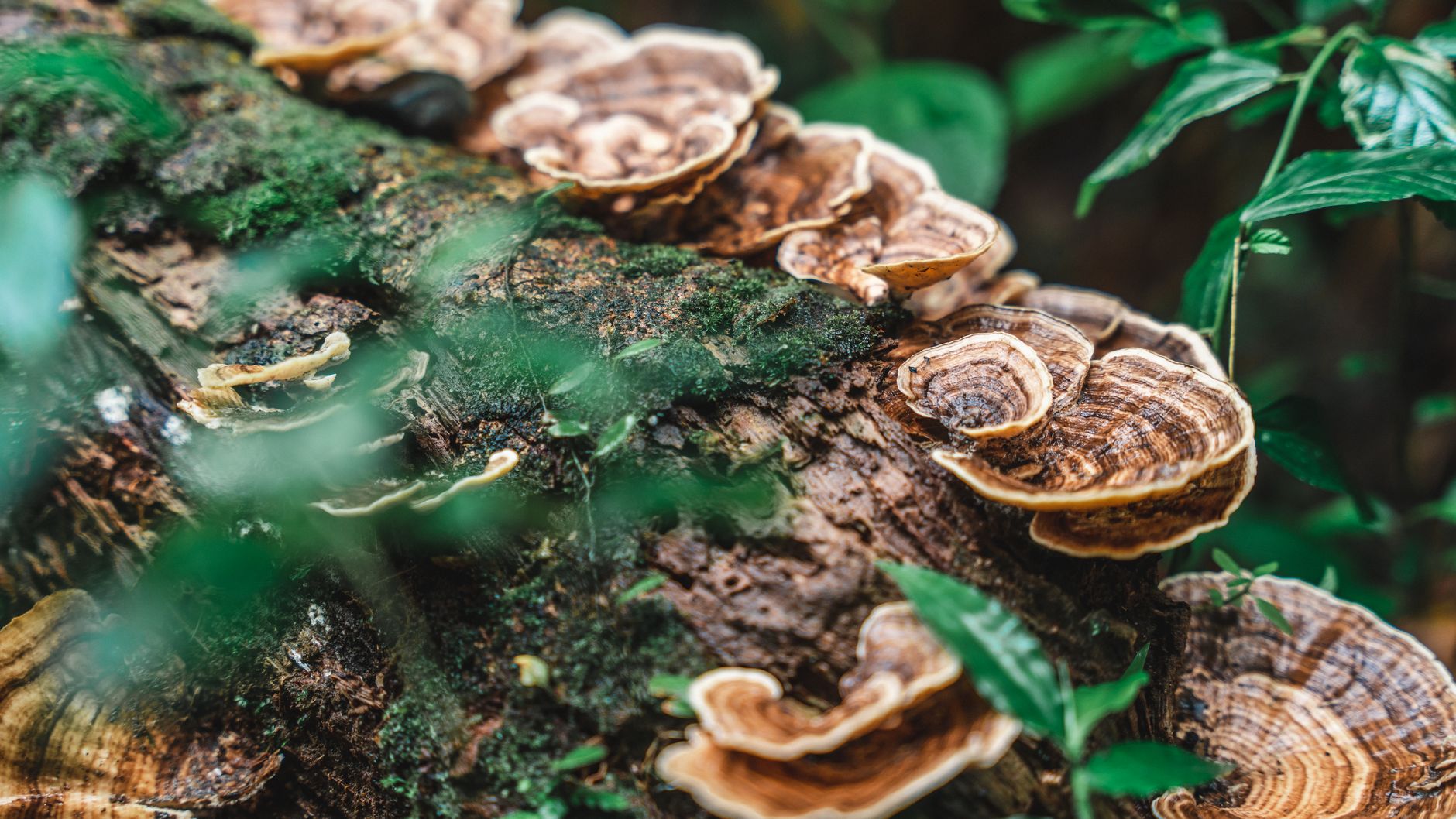
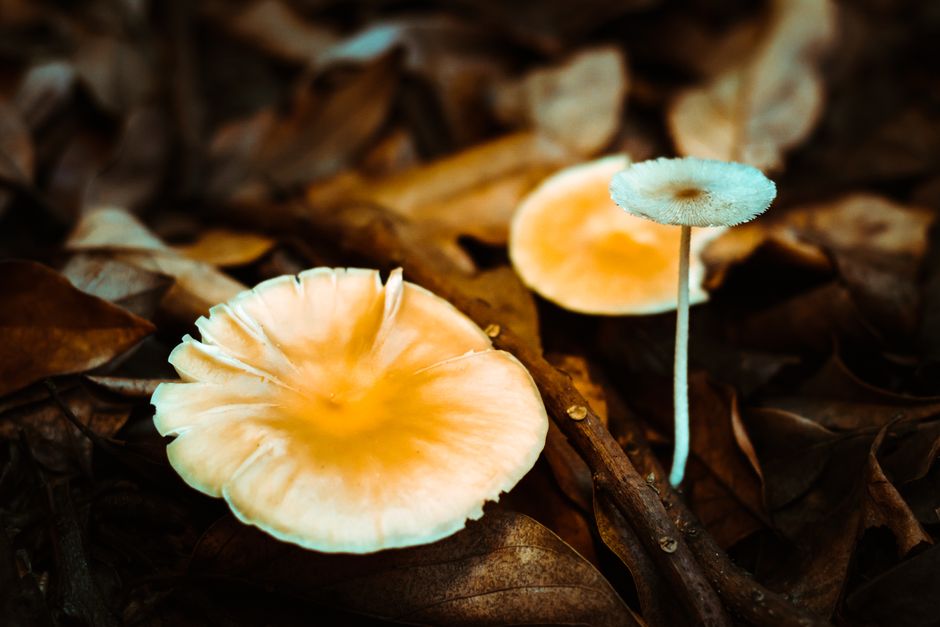
Schizophyllum commune, commonly known as the split-gill mushroom, is one of the most widely distributed fungi on the planet. Found on every continent except Antarctica, it grows on dead and decaying hardwood and has been recognized in traditional food cultures across parts of Asia, Africa, and Latin America. In recent decades, researchers have turned increasing attention to its primary bioactive compound, a beta-glucan polysaccharide called schizophyllan, for its potential immunomodulatory and antioxidant properties.
What Is Schizophyllum commune?
Schizophyllum commune is a bracket-forming fungus identifiable by its distinctive fan-shaped fruiting bodies and forked, split gill-like ridges on the underside of its cap. It is highly adaptable and has been used as a food source in parts of Mexico, Papua New Guinea, and West Africa. Beyond culinary applications, it has attracted scientific interest because its mycelium produces schizophyllan (SPG), a water-soluble exopolysaccharide with a unique triple-helix conformation.
Schizophyllan belongs to the family of (1→3)-beta-D-glucans, the same structural class of polysaccharides found in several other well-studied medicinal mushrooms including Ganoderma lucidum (reishi) and Trametes versicolor (turkey tail). Researchers have characterized schizophyllan’s triple-helix structure as a key feature that may influence how it interacts with immune receptors in the body.[1]
Bioactive Compounds
Beyond schizophyllan, S. commune contains a range of bioactive constituents. A decade-long critical review published in Food Chemistry (2025) identified the following compounds as contributors to the mushroom’s observed biological activities:
- Polysaccharides: Primarily schizophyllan, though other fractions have been isolated with varying structural characteristics
- Flavonoids: Plant-like phenolic compounds with potential antioxidant activity
- Saponins: Amphipathic glycosides with documented surface-active properties
- Ergosterol: A sterol precursor to vitamin D2, also found in most edible fungi
The same review noted that the compound profile of S. commune suggests potential relevance to antioxidant defense, anti-inflammatory pathways, and immune modulation, though the authors noted that much of the evidence remains preclinical.[2]
Schizophyllan and Immune Modulation: What the Research Shows
The majority of published research on S. commune focuses on schizophyllan’s interactions with the immune system. Beta-glucans in general are thought to engage pattern-recognition receptors such as Dectin-1 on macrophages and dendritic cells, which may influence cytokine production and downstream immune responses.
Preclinical Findings
In vitro and animal studies have explored schizophyllan’s effects on T-cell activity, macrophage activation, and cytokine expression. Research published in Carbohydrate Polymers found that a beta-glucan fraction from S. commune modulated interleukin-10 expression in cells stimulated with lipopolysaccharide from periodontopathic bacteria, suggesting a potential role in inflammatory signaling.[3] Researchers noted, however, that the clinical relevance of these findings requires further investigation.
A broader review published in the Proceedings of the Society for Experimental Biology and Medicine examined the antitumor mechanisms of several medicinal mushroom species, including S. commune, and concluded that the beta-glucan fractions from these fungi appear to exert their biological effects largely through T-cell and macrophage-mediated pathways. The review noted that despite structural similarities across species, individual glucan preparations differ meaningfully in their potency and specificity across various immune contexts.[4]
Clinical Research: Sizofiran as an Adjuvant
Schizophyllan has been studied clinically under the pharmaceutical name sizofiran, particularly in Japan, where it received approval as an adjuvant therapy for cervical carcinoma. A prospective randomized trial involving 312 patients with locally advanced cervical carcinoma compared outcomes for patients receiving radiotherapy alone versus those receiving sizofiran in combination with radiotherapy. The trial reported significantly improved five-year survival in the sizofiran-treated group, with the authors attributing part of the effect to the compound’s apparent ability to support recovery of cell-mediated immunity following radiation treatment.[5]
It is important to note that sizofiran represents a purified, standardized pharmaceutical-grade preparation administered under medical supervision. These findings do not translate directly to over-the-counter supplement products, which vary substantially in composition, extraction method, and bioavailability.
Antioxidant Properties
Research suggests that polysaccharide fractions from S. commune may exhibit antioxidant activity in laboratory settings. Studies measuring free radical scavenging capacity have found that schizophyllan preparations demonstrate DPPH and ABTS radical inhibition, though the extent of this activity varies considerably depending on the extraction method, solvent used, and molecular weight of the polysaccharide fraction.
The 2025 comprehensive review noted that S. commune shows strong antioxidant activity at the cellular level, including potential protection against oxidative DNA damage, and highlighted genoprotective effects observed in studies using environmental toxin models.[2] As with the immune data, most of this evidence comes from preclinical models rather than human trials.
Schizophyllan’s Unique Structural Properties
One of the more unusual aspects of schizophyllan research concerns its physical structure. The triple-helix conformation of SPG has attracted interest from pharmaceutical researchers not only for its biological activity but also for its potential as a drug delivery scaffold. Reviews published in Carbohydrate Polymers have examined schizophyllan’s capacity to form stable complexes with nucleic acids and other biomolecules, making it a subject of investigation in gene therapy and targeted drug delivery contexts entirely separate from nutritional supplement use.[1]
This versatility distinguishes schizophyllan from many other mushroom polysaccharides and illustrates how a single compound can occupy different research spaces simultaneously.
Safety and Tolerability
Available evidence suggests that S. commune and its polysaccharide extracts are generally well tolerated. High-dose animal studies have not identified significant toxicity, and the mushroom has a long history of consumption as food in multiple cultures. However, it is worth noting that clinical research has focused on specific purified preparations rather than whole mushroom products. Individuals who are immunocompromised, pregnant, or taking immunosuppressive medications should consult a healthcare provider before using any medicinal mushroom product.
For those evaluating functional mushroom supplements more broadly, understanding how to interpret beta-glucan content claims on labels is useful context. Our guide on how to read a mushroom supplement label covers what beta-glucan percentages and polysaccharide content claims actually indicate.
Summary
Schizophyllum commune is a broadly distributed edible fungus whose primary bioactive compound, schizophyllan, has been studied for immunomodulatory, antioxidant, and anti-inflammatory properties. Clinical research on its pharmaceutical derivative sizofiran provides some of the more rigorous human data available for any functional mushroom compound, though this evidence is specific to an adjuvant oncology context rather than general wellness use. The broader compound profile of S. commune including its flavonoids, saponins, and ergosterol content adds further research interest. As a functional mushroom for supplement purposes, it remains less widely available than reishi or lion’s mane, but its scientific literature is substantive and growing.
References
- [1] Ansari E, et al. Research progress on production and biomedical applications of schizophyllan as a tailor-made polysaccharide: A review. Carbohydr Polym. 2025;348(Pt A):122770. PMID: 39562055
- [2] Kumar Y, Xu B. Bioactive compounds, health benefits, and practical applications of edible mushroom Schizophyllum commune Fr.: A decade-long critical review. Food Chem. 2025;492(Pt 3):145583. PMID: 40701086
- [3] Thongsiri C, et al. Schizophyllum commune beta-glucan: Effect on interleukin-10 expression induced by lipopolysaccharide from periodontopathic bacteria. Carbohydr Polym. 2021;253:117285. PMID: 33278951
- [4] Borchers AT, et al. Mushrooms, tumors, and immunity. Proc Soc Exp Biol Med. 1999;221(4):281-93. PMID: 10460691
- [5] Miyazaki K, et al. Activated (HLA-DR+) T-lymphocyte subsets in cervical carcinoma and effects of radiotherapy and immunotherapy with sizofiran on cell-mediated immunity and survival. Gynecol Oncol. 1995;56(3):412-20. PMID: 7705677
Disclaimer: The information on this page is for educational purposes only and does not constitute medical advice. Functional mushroom supplements are not intended to diagnose, treat, cure, or prevent any disease. Always consult a qualified healthcare provider before starting any new supplement, especially if you have an existing medical condition or are taking prescription medications.