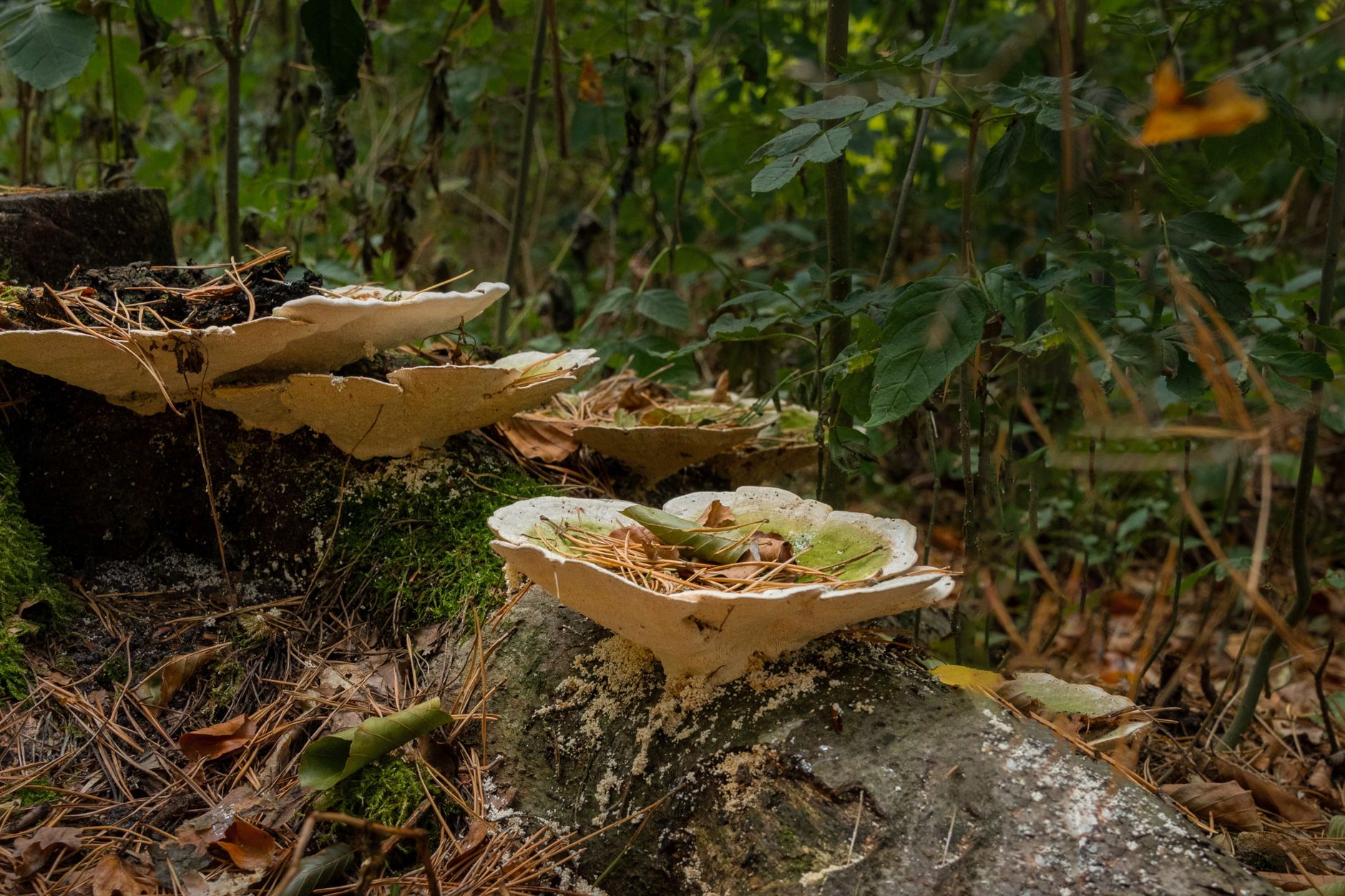
Poria cocos (Schw.) Wolf, known in traditional Chinese medicine as Fuling, is a parasitic fungus that grows on the roots of pine trees across East and Southeast Asia. Despite its relatively low profile in Western supplement markets compared to species like Reishi or Lion’s Mane, Poria cocos has one of the longest documented histories of medicinal use among all functional fungi, appearing in Chinese medical texts for over 2,000 years. In recent decades, researchers have begun to characterize the biological basis for its traditional applications, with particular attention to its polysaccharide fraction.
Historical and Traditional Context
In traditional Chinese medicine, Poria cocos was classified as a tonic herb with a wide range of applications. It was prescribed for conditions associated with what TCM describes as deficiencies of the heart, spleen, and kidney, with clinical uses including the promotion of calm, support for digestion, and management of fluid retention. Formulations containing Poria cocos appear across many classical TCM prescriptions for insomnia, anxiety, and gastrointestinal disturbance, typically in multi-herb combinations rather than as a standalone agent.
The fungus is not typically harvested for its fruiting body. Instead, the sclerotium, a hardened mass of mycelium that forms underground at the base of host pine trees, is the medicinally used part. It is this dense, starchy tissue that contains the compounds most studied in modern research.
Primary Bioactive Compounds
Two major compound classes have been identified as pharmacologically relevant in Poria cocos: polysaccharides and triterpenes. The polysaccharide fraction, commonly referred to as Poria cocos polysaccharides (PCP), has received the most scientific attention. These are primarily beta-glucans and their derivatives, along with some heteropolysaccharides that have been chemically modified to enhance solubility and biological activity. The triterpene fraction includes lanostane-type acids such as pachymic acid, tumulosic acid, and poricoic acids, which are structurally distinct from the polysaccharides and appear to exert different mechanisms of action.
A review published in the International Journal of Biological Macromolecules summarized the documented biological activities of PCP and their derivatives, noting anticancer, anti-inflammatory, antioxidant, and antiviral properties across multiple experimental systems. The authors noted that PCP and their derivatives show considerable potential as therapy or adjuvant therapy candidates in the context of immune-related and antiviral conditions.[1]
Immunomodulatory Effects
Research on the immune effects of Poria cocos has examined both its polysaccharide and protein fractions. One line of investigation has focused on an immunomodulatory protein isolated from Poria cocos, designated PCP, which researchers have studied for its capacity to influence T-cell-mediated immune responses.
A study published in the Journal of Agricultural and Food Chemistry cloned the gene encoding this protein and evaluated its immunological activity in cell cultures and animal models. The researchers found that PCP significantly increased surface expression of activation markers CD44 and CD69 on effector T cells when combined with co-stimulatory signals, and upregulated T-bet and STAT4 expression along with IFN-gamma and IL-2 secretion, markers associated with Th1 immune polarization. In a murine model of atopic dermatitis, oral administration of the protein was associated with significant reductions in IL-4 and IgE expression, suggesting a shift away from the Th2-skewed immune response characteristic of allergic conditions.[2] These findings are preclinical, and direct translation to human immune function has not yet been established in rigorous clinical trials.
Gut Health and Anti-Inflammatory Mechanisms
One of the more clinically interesting emerging areas of Poria cocos research concerns its potential effects on intestinal inflammation and gut barrier integrity. This aligns closely with its traditional use description of “invigorating the spleen and relieving diarrhea,” which in TCM terminology corresponds to digestive and gastrointestinal support.
A 2026 study published in the Journal of Ethnopharmacology investigated the effects of Poria cocos polysaccharides on a mouse model of Salmonella-induced infectious colitis. The researchers found that PCP administration significantly reduced clinical symptoms of colitis, restored colon length, and improved colonic histopathology in a dose-dependent manner. At the molecular level, PCP reinforced intestinal epithelial barrier integrity by upregulating tight junction proteins including ZO-1, Occludin, and Claudin. Mechanistically, PCP appeared to work through the tryptophan metabolism pathway, enriching endogenous aryl hydrocarbon receptor (AhR) ligands and subsequently suppressing inflammatory cascades involving NF-kappaB and JAK/STAT3 signaling. The mRNA levels of the pro-inflammatory cytokines IL-6 and TNF-alpha were reduced by more than 70% in treated animals compared to the model group.[3] The authors noted that this research provides modern scientific support for the traditional application of Poria cocos in intestinal conditions, though human clinical validation remains necessary.
Prebiotic Potential
A complementary research direction examines whether Poria cocos polysaccharides may function as prebiotics, selectively promoting beneficial gut bacteria. A study published in Foods assessed the prebiotic activity of PCP using in vitro fecal fermentation models with samples from both normal-weight and obese children. The researchers found that PCP supplementation promoted the growth of Bifidobacterium and Limosilactobacillus in both groups, accompanied by increased production of acetic acid and indolelactic acid. The latter metabolite is of particular relevance given its role in gut barrier support and immune modulation. The authors suggested PCP may be considered a functional food component for supporting gut health, and that its prebiotic profile is distinct from but comparable to inulin in several respects.[4] These findings were based on in vitro fermentation, and in vivo human studies would be needed to confirm the clinical relevance.
Neurological and Sleep-Related Research
Poria cocos has also attracted attention in the context of sleep and neurological calm, consistent with its traditional use as a calming tonic. The triterpenoid pachymic acid has been studied for its effects on GABAergic pathways, which are central to sleep regulation. Research has suggested that pachymic acid may enhance pentobarbital-induced sleep duration, reduce sleep latency, and modulate GABA-A receptor subunit expression in animal models. These findings are relevant to the traditional application of Poria cocos in formulas for insomnia and anxiety, and have been discussed in reviews of traditional Chinese herbal medicine for sleep disorders.
Additionally, recent systematic research examining the antidepressant potential of medicinal fungi has included Poria cocos among species whose extracts demonstrate relevant activity in preclinical models, with proposed mechanisms involving gut-brain axis modulation and reduction of pro-inflammatory cytokines associated with mood dysregulation. For a broader look at how functional mushrooms may interact with stress pathways, see our review of how mushrooms may support stress and anxiety.
Supplement Considerations
Poria cocos is available in several forms, including whole powdered sclerotium, water extracts, and chemically modified polysaccharide derivatives. The biological activity of PCP in research has often used purified or partially purified fractions, and whether commercial supplement products deliver comparable compound profiles depends on extraction method and quality control. As with other functional mushrooms, beta-glucan content and third-party testing are meaningful indicators of extract quality.
Poria cocos has a long history of culinary and medicinal use with a well-established general safety profile. Individuals taking immunosuppressant medications or managing diagnosed immune conditions should consult a healthcare provider before adding any functional mushroom supplement to their routine, as immunomodulatory effects are possible.
Summary
Poria cocos occupies a distinctive position in the functional mushroom landscape: it is among the most historically used medicinal fungi in East Asian medicine, yet remains less widely recognized in Western markets than some better-marketed species. Modern research has begun to validate several of its traditional applications, with the strongest emerging evidence focused on anti-inflammatory and gut barrier effects, prebiotic activity, and immunomodulatory properties linked to its polysaccharide and protein fractions. GABAergic effects of its triterpenoid fraction offer a plausible basis for its traditional sedative applications. While the evidence base is largely preclinical at this stage, the research directions are credible and the compound mechanisms are well-characterized. Human clinical trials examining its effects on gut inflammation, immune function, and sleep outcomes would represent meaningful advances in this area.
References
- [1] Sun Y. Biological activities and potential health benefits of polysaccharides from Poria cocos and their derivatives. Int J Biol Macromol. 2014;68:131-4. PMID: 24751506
- [2] Lu YT, Kuan YC, Chang HH, Sheu F. Molecular cloning of a Poria cocos protein that activates Th1 immune response and allays Th2 cytokine and IgE production in a murine atopic dermatitis model. J Agric Food Chem. 2014;62(13):2861-71. PMID: 24625278
- [3] Cheng H, et al. Poria cocos polysaccharides alleviate colitis via the tryptophan metabolism-AhR-redox axis. J Ethnopharmacol. 2026;368:121802. PMID: 42128077
- [4] Qiu DY, et al. In Vitro Assessment of the Prebiotic Effects of Poria Cocos Polysaccharides Using Fecal Microbiota from Normal-Weight and Obese Children. Foods. 2025;14(23):4077. PMID: 41376015
Disclaimer: This article is for informational purposes only and does not constitute medical advice. Poria cocos supplements are not intended to diagnose, treat, cure, or prevent any disease. Consult a qualified healthcare provider before starting any new supplement regimen, especially if you have an existing medical condition or take medications.