Functional mushrooms have moved from fringe wellness circles into mainstream supplement culture, and for good reason: the evidence behind species like Lion’s Mane, Reishi, and Cordyceps is growing steadily. But as more people add multiple mushroom supplements to their daily routines, a natural question arises: is combining them safe, and can they actually work better together?
The short answer is yes, with some nuance. Here is what the current science suggests about stacking functional mushrooms safely and effectively.
What Is Mushroom Stacking?
In the supplement world, “stacking” means combining two or more compounds to target different biological pathways simultaneously. With functional mushrooms, this typically means pairing species with complementary mechanisms: one mushroom for cognitive support, another for immune function, and a third for energy metabolism.
Unlike pharmaceutical drugs, most functional mushrooms act through broad, modulatory pathways rather than narrow receptor targets. Their key active compounds, primarily beta-glucan polysaccharides, triterpenes, and ergosterols, tend to support rather than force biological responses. This “adaptogenic” quality is part of what makes combining them relatively low-risk compared to stacking, say, stimulants or hormones.
The Science Behind Why Combinations Can Work
Most functional mushrooms share a common active compound class: beta-glucans. These complex polysaccharides interact with immune receptors (particularly Dectin-1 and toll-like receptors) to modulate immune activity. A 2021 systematic review of randomized controlled trials found that fungal beta-glucans exerted measurable effects on immune markers, including changes in white blood cell activity and cytokine profiles.[1]
When you stack multiple mushroom species, you are not simply doubling a beta-glucan dose. Each species carries its own unique secondary compounds. Reishi (Ganoderma lucidum) is rich in triterpenes like ganoderic acids. Lion’s Mane (Hericium erinaceus) contains hericenones and erinacines that stimulate nerve growth factor (NGF) synthesis. Cordyceps provides adenosine precursors and cordycepin. These distinct phytochemical profiles allow each mushroom to contribute to different physiological systems at once.
A 2025 review examining the bioactive compounds in medicinal mushrooms highlighted how individual species target distinct chronic inflammatory pathways, suggesting that combining species with non-overlapping mechanisms could provide broader coverage without redundant activity.[2]
Popular and Well-Reasoned Stack Combinations
Lion’s Mane + Reishi
This is one of the most popular pairings, and arguably the most evidence-backed. Lion’s Mane targets the nervous system: its hericenone content has been shown in multiple preclinical studies to upregulate NGF, supporting neuronal repair and cognitive function. Reishi, by contrast, works primarily on immune modulation and stress response via its triterpene content. A clinical study found that Ganoderma lucidum extract supplementation modulated T-lymphocyte function in older women, suggesting real immune effects in human subjects.[3]
Since these two mushrooms act on separate systems (nervous vs. immune/stress), stacking them creates complementary rather than redundant coverage. This combination is popular among people seeking both cognitive clarity and immune resilience.
Reishi + Cordyceps
Reishi’s calming, immune-modulatory properties pair naturally with Cordyceps’ energy and oxygen-utilization support. Reishi is often taken in the evening for its association with relaxation and sleep quality, while Cordyceps is typically taken before physical activity. If you are stacking these two, consider timing them separately: Cordyceps in the morning or pre-workout, Reishi in the evening.
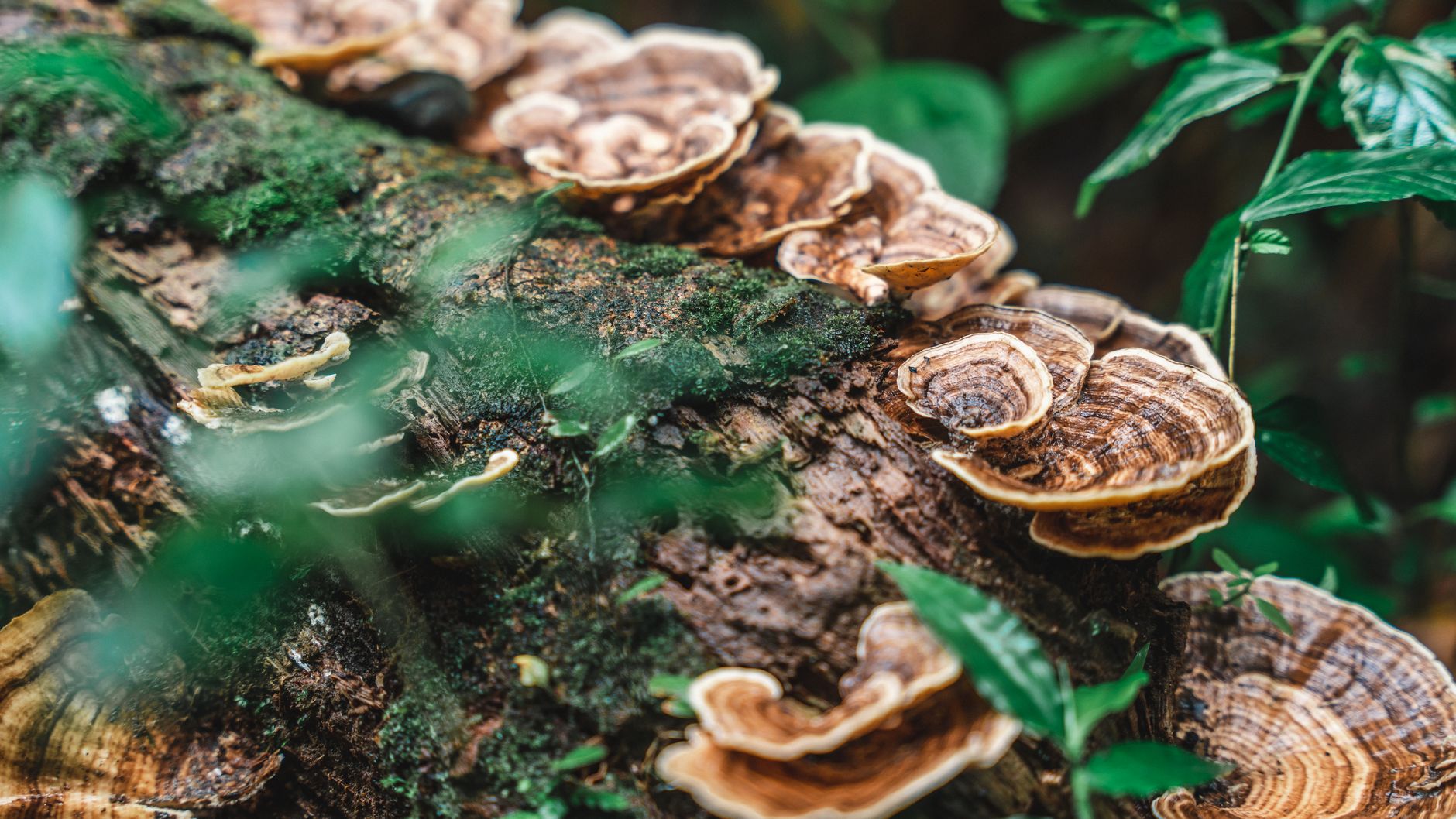
Lion’s Mane + Turkey Tail
This pairing targets two distinct but complementary systems: the gut and the brain. Turkey Tail (Trametes versicolor) is rich in polysaccharide-K (PSK) and prebiotics that support gut microbiome diversity. Since the gut-brain axis is now well-established in the scientific literature, supporting gut health with Turkey Tail while simultaneously stimulating neurotrophin production with Lion’s Mane represents a logical, mechanistically sound stack. For more on Turkey Tail’s prebiotic effects, see our guide to Turkey Tail and gut health.
Safety Considerations Before Stacking
Functional mushrooms are generally well-tolerated, and documented adverse interactions between species are rare. However, a few safety principles are worth following:
Start with one at a time. If you are new to functional mushrooms, introducing one species at a time for two to four weeks lets you identify how your body responds before adding another. Gastrointestinal sensitivity, though uncommon, does occur in some people with higher-polysaccharide formulas.
Watch for immune over-stimulation in autoimmune conditions. Beta-glucan-rich mushrooms modulate immune activity. For individuals with autoimmune diseases (lupus, rheumatoid arthritis, multiple sclerosis), increasing immune signaling may theoretically aggravate symptoms. Consult a healthcare provider before stacking multiple immune-active mushrooms if you have an autoimmune condition.
Drug interactions are rare but real. Reishi has mild anticoagulant properties in some studies. Stacking high doses of Reishi with blood-thinning medications warrants caution. Similarly, Cordyceps may have modest blood-pressure-lowering effects, which could compound with antihypertensive medications.
Dose attribution matters. Because this article follows responsible supplement journalism standards, specific dosing amounts should always be tied to individual studies rather than given as blanket recommendations. For example, a 2019 Hericium erinaceus study used a specific daily dose to assess cognitive outcomes in older adults, and replicating study conditions is generally safer than freelancing with higher amounts.
Product Form: Extracts vs. Whole Fruiting Bodies
When stacking, the form of your mushroom supplement matters. Hot-water or dual (water + alcohol) extracts concentrate beta-glucans and secondary compounds more reliably than raw powder or mycelium-on-grain products. Understanding the difference between full-spectrum and extract products is important before building a stack: more active compounds does not always mean more is better, and bioavailability varies considerably by extraction method.
Optimizing hormone health often intersects with supplement choices, and some men find that energy-focused mushroom stacks complement broader wellness goals. For a broader look at natural approaches to men’s vitality, the team at Modern Men’s Health has a thorough guide to increasing testosterone naturally that covers lifestyle, nutrition, and supplement synergies worth reading alongside any mushroom protocol.
How to Build Your Stack
A practical approach to building a functional mushroom stack:
1. Define your primary goal. Cognitive performance, immune support, stress resilience, and athletic performance each point toward different lead mushrooms.
2. Choose a primary and one complement. Start with two mushrooms maximum. A common structure: one neurological/cognitive mushroom (Lion’s Mane) + one immune/stress mushroom (Reishi or Turkey Tail).
3. Use quality extracts. Look for products specifying beta-glucan percentage (ideally 30%+) and that list the fruiting body as the source material.
4. Give it time. Functional mushrooms are not acute stimulants. Most research protocols run four to twelve weeks before assessing outcomes. Patience is part of the protocol.
References
- [1] Vlassopoulou M, et al. Effects of fungal beta-glucans on health: a systematic review of randomized controlled trials. Nutr Rev. 2021. PMID: 33876798
- [2] Xiaoying M, et al. From functional foods to immunotherapeutic agents: mechanistic insights into medicinal mushroom bioactives in chronic inflammation. Front Nutr. 2025. PMID: 41445832
- [3] Iser-Bem PN, et al. Ganoderma lucidum dry extract supplementation modulates T lymphocyte function in older women. Br J Nutr. 2024. PMID: 38800991
This article is for informational purposes only and does not constitute medical advice. Always consult a qualified healthcare provider before starting any supplement.