Getting consistent, restorative sleep is one of the most important factors in overall health. While lifestyle interventions remain the cornerstone of sleep hygiene, a growing body of research has examined how certain functional mushrooms may support sleep quality through various biological mechanisms. This overview ranks the most studied species based on available evidence.
Why Mushrooms May Affect Sleep Biology
Several functional mushrooms contain bioactive compounds that interact with neurotransmitter systems involved in sleep regulation, including gamma-aminobutyric acid (GABA) pathways, serotonin signaling, and inflammatory mediators. Research suggests these interactions may influence sleep onset, sleep duration, and sleep quality, though most evidence at this stage comes from preclinical models and small human trials.
1. Reishi (Ganoderma lucidum) — Most Evidence for Sleep Support
Reishi is the most extensively studied mushroom for sleep-related effects. Its fruiting body contains triterpenoids — including a compound called lucidone D — that have demonstrated sedative-hypnotic activity in preclinical research. A 2019 study published in Cell and Molecular Biology found that lucidone D extracted from Ganoderma lucidum showed significant sedative effects in mouse models, reducing locomotor activity and prolonging sleep-like states.[1]
The proposed mechanism involves modulation of GABA receptor activity and suppression of pro-inflammatory cytokines such as TNF-alpha and IL-6, both of which are associated with disrupted sleep architecture. Reishi’s polysaccharide peptides have also been studied in the context of sleep fragmentation, with one investigation noting effects on immune-related pathways that may overlap with sleep regulation.[2]
Traditional use in East Asian medicine has long positioned Reishi as a calming, sleep-supporting herb, and modern pharmacological research has begun to provide a mechanistic basis for those historical applications.
2. Poria cocos (Fuling) — GABAergic Pathway Research
Poria cocos, known as Fuling in traditional Chinese medicine, has one of the more clearly defined mechanisms among sleep-relevant fungi. Its primary active triterpenoid, pachymic acid, has been the subject of several pharmacological studies.
A study published in Biomolecular Therapeutics found that pachymic acid enhanced pentobarbital-induced sleep duration in mice, reduced sleep latency, and elevated intracellular chloride levels in neuronal cells — a hallmark of GABAergic activity. The compound also increased expression of GAD65/67, an enzyme involved in GABA synthesis, and modulated GABA-A receptor subunit levels.[3]
A review of traditional Chinese herbal medicine for insomnia treatment published in the International Review of Neurobiology identified Poria cocos as one of the most frequently used sedative herbs in clinical practice, with its pharmacological effects attributed largely to GABA-A receptor modulation.[4]
Poria cocos is frequently included in multi-herb formulas for insomnia in East Asian clinical settings, though isolating its specific contribution in those combination studies presents methodological challenges.
3. Lion’s Mane (Hericium erinaceus) — Indirect Pathway via Mood and Anxiety
Lion’s Mane does not appear to act on sleep through direct sedative mechanisms. Instead, research suggests it may support sleep indirectly by reducing anxiety, supporting gut microbiome diversity, and promoting nerve growth factor (NGF) expression — all of which have downstream effects on sleep regulation.
A 2025 systematic review published in Frontiers in Nutrition examined clinical and preclinical evidence for Hericium erinaceus as a supplement. Among its findings, the review noted that HE enhanced pro-BDNF and BDNF production, promoted hippocampal neurogenesis, and reduced symptoms of depression, anxiety, and sleep disorders.[5]
Since anxiety and depression are among the most common contributors to poor sleep, the evidence for Lion’s Mane in mood regulation is relevant to sleep health, even if it does not directly induce sedation.
4. Turkey Tail and Chaga — Limited Direct Sleep Evidence
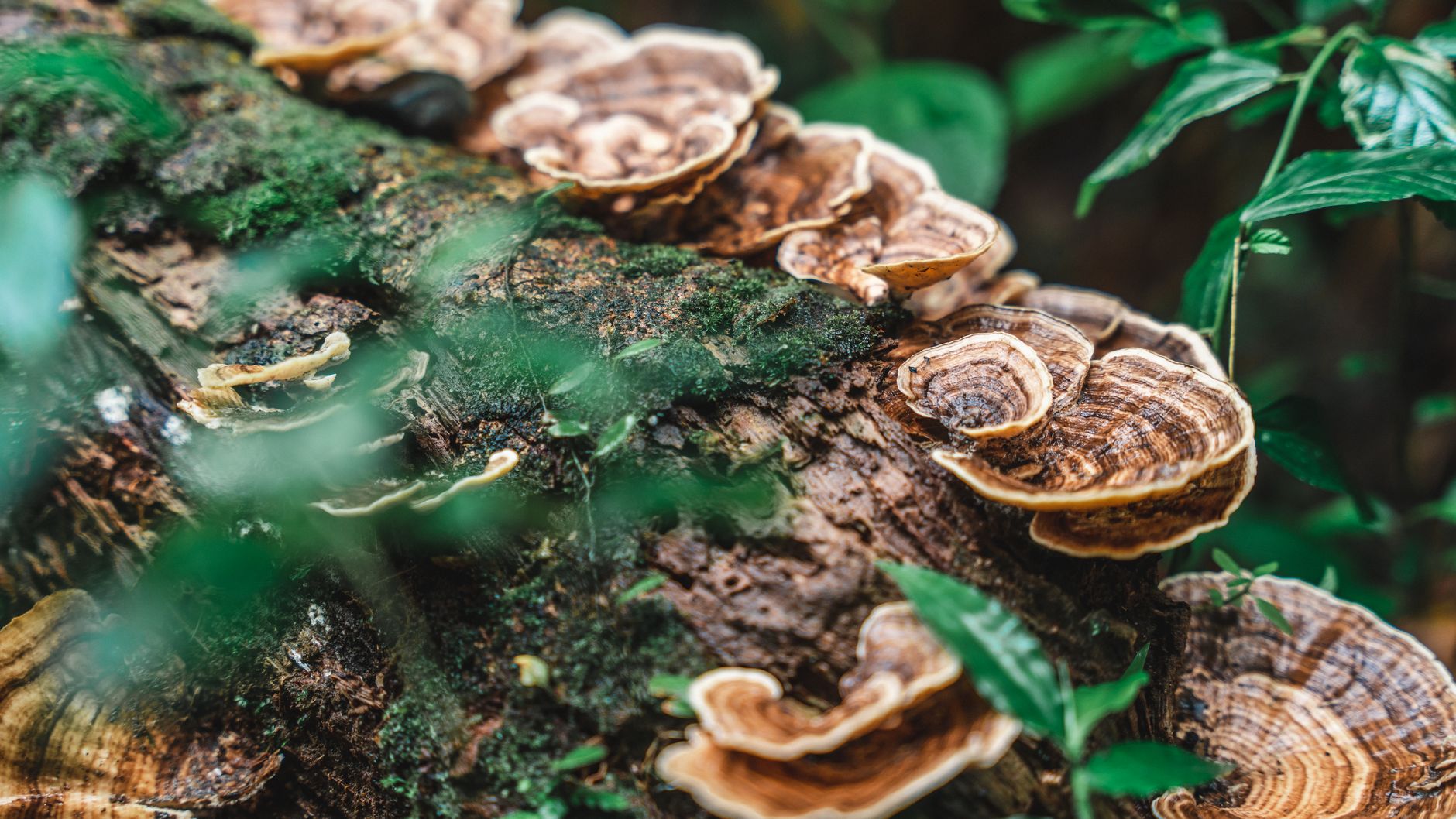
Turkey Tail (Trametes versicolor) and Chaga (Inonotus obliquus) are most extensively studied for their immune-modulating properties. Research on their direct effects on sleep is limited, though systemic inflammation has well-established links to sleep disturbance. Studies indicate that reducing inflammatory burden through beta-glucan-rich mushrooms may have indirect benefits on sleep quality, particularly in individuals whose sleep is disrupted by chronic inflammatory conditions.
At this stage, attributing specific sleep benefits to Turkey Tail or Chaga requires more targeted investigation. They are not typically the first choice when sleep support is the primary goal.
How These Mushrooms Are Typically Used in Sleep Research
Across the studies reviewed, mushroom extracts have been delivered orally in standardized doses. Specific dosages were determined within individual study protocols and should not be extrapolated as general recommendations. Delivery formats ranged from powdered extracts in capsule form to liquid preparations. Duration varied from single-session pharmacological models to multi-week human supplementation trials.
For those exploring functional mushrooms alongside other sleep interventions, it is worth noting that our broader overview of functional mushrooms and sleep covers additional mechanistic detail on how these compounds interact with sleep biology.
A Note on Study Limitations
Most sleep-related mushroom research to date has been conducted in rodent models or small human cohorts. Extrapolating these findings to general recommendations requires caution. Many studies use isolated compounds rather than whole-mushroom extracts, and bioavailability of these compounds in commercially available supplements may differ from research-grade preparations. Large-scale randomized controlled trials in healthy human populations remain limited.
Summary Rankings by Evidence Strength
- Strongest evidence: Reishi (Ganoderma lucidum) — triterpenoid sedative mechanisms, preclinical and some clinical support
- Strong mechanistic evidence: Poria cocos — GABAergic pathway research with direct sleep outcome measures
- Indirect evidence: Lion’s Mane — mood and anxiety pathways that may support sleep secondarily
- Limited direct evidence: Turkey Tail, Chaga — primarily immune-focused; sleep relevance is inferred from inflammation-sleep links
Research in this area continues to develop. As more rigorous human trials are conducted, recommendations may become more specific. For now, Reishi and Poria cocos represent the most evidence-backed options among functional mushrooms studied for sleep-related outcomes.
References
- 1. Feng X, Wang Y. Anti-inflammatory, anti-nociceptive and sedative-hypnotic activities of lucidone D extracted from Ganoderma lucidum. Cell Mol Biol. 2019;65(4):37-42. PMID: 31078150
- 2. Xian H, et al. Antimetastatic Effects of Ganoderma lucidum Polysaccharide Peptide on Melanoma Mice With Sleep Fragmentation. Front Pharmacol. 2021;12:650216. PMID: 34305583
- 3. Shah VK, et al. Pachymic Acid Enhances Pentobarbital-Induced Sleeping Behaviors via GABAA-ergic Systems in Mice. Biomol Ther (Seoul). 2014;22(4):314-20. PMID: 25143810
- 4. Singh A, Zhao K. Treatment of Insomnia With Traditional Chinese Herbal Medicine. Int Rev Neurobiol. 2017;135:97-115. PMID: 28807167
- 5. Menon A, et al. Benefits, side effects, and uses of Hericium erinaceus as a supplement: a systematic review. Front Nutr. 2025;12:1641246. PMID: 40959699
Disclaimer: This content is for informational purposes only and does not constitute medical advice. Functional mushroom supplements have not been evaluated by the FDA for the diagnosis, treatment, cure, or prevention of any disease. Consult a qualified healthcare provider before beginning any new supplement regimen, especially if you are taking medications or have an existing health condition.