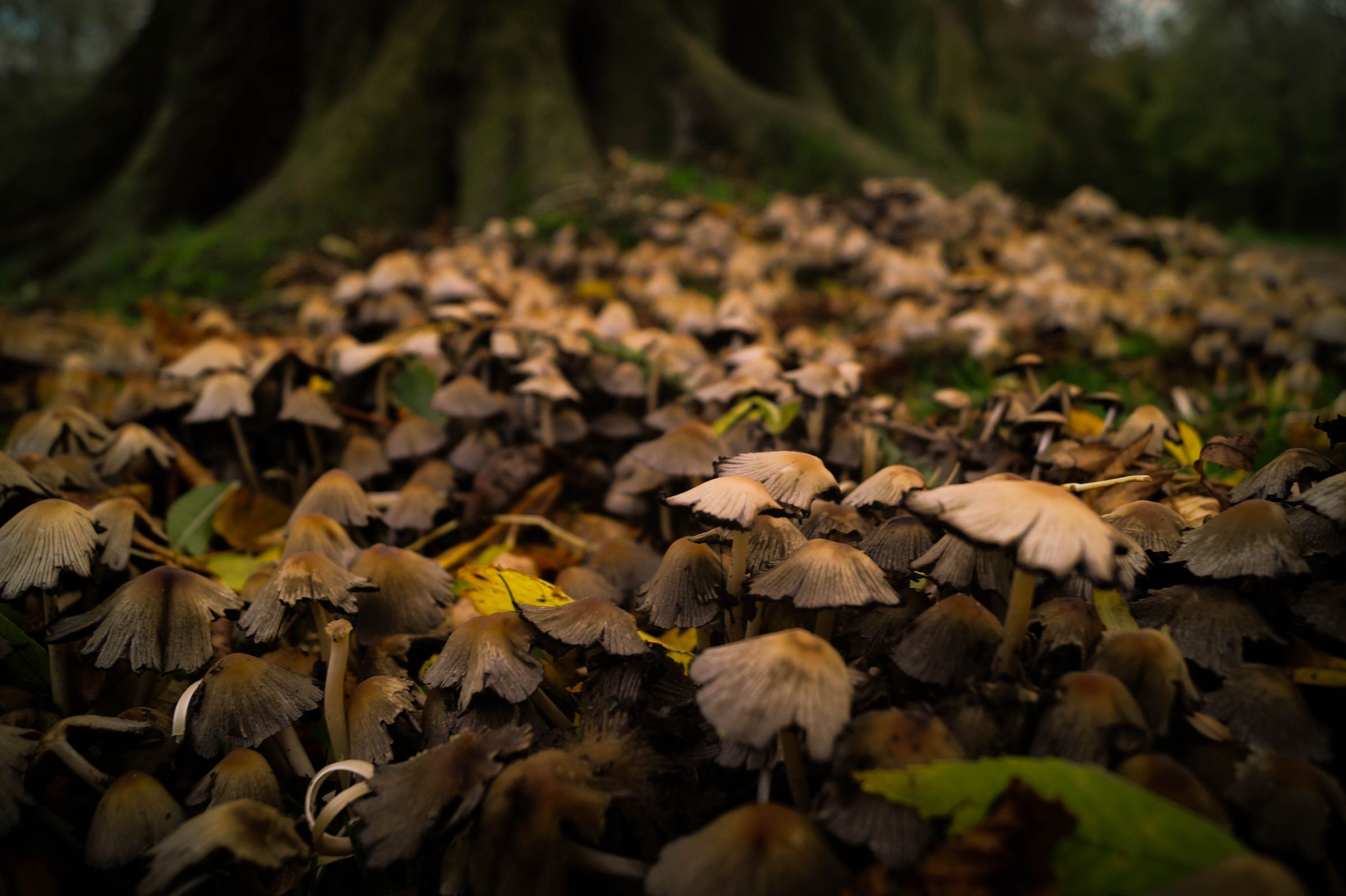
Poria cocos (also known as Wolfiporia extensa or Fu Ling in Traditional Chinese Medicine) is a wood-decay fungus that has occupied a central place in East Asian herbal medicine for more than two millennia. Unlike many functional mushrooms that grow visibly above ground, Poria cocos forms a dense, underground sclerotium — a compact mass of mycelium — around the roots of pine trees. That unassuming growth habit belies a rich pharmacological profile that modern researchers are only beginning to map systematically.
Historical and Traditional Context
In classical Chinese medicine texts, Fu Ling was categorized as a calming tonic said to support the spleen, stomach, heart, and lungs. Practitioners used it to address digestive weakness, palpitations, restless sleep, and excess fluid accumulation. The mushroom was often included in multi-herb formulas rather than taken in isolation, blended with ingredients like ginger, licorice root, and cinnamon bark to address specific pattern imbalances.
Modern pharmacological work has identified two primary classes of active compounds that appear to underpin many of these traditional applications: polysaccharides (particularly beta-glucans and heteropolysaccharides) and triterpenoids (including pachymic acid and its derivatives). Research into these fractions has expanded considerably over the past decade, lending some scientific grounding to historical uses.[1]
Immune Modulation: What the Research Shows
The most studied area of Poria cocos research involves its polysaccharide fractions and their effects on immune function. Several in vitro and animal studies suggest that these compounds may stimulate macrophage activity, increase cytokine production, and modulate both innate and adaptive immune responses.
A 2026 study published in Vaccines examined a specific polysaccharide fraction — designated PCP-II — as a potential vaccine adjuvant in a mouse model. The researchers found that PCP-II significantly increased antigen-specific IgG antibody levels and enhanced neutralizing antibody responses to a SARS-CoV-2 receptor-binding domain subunit vaccine. Additionally, PCP-II was associated with increased IFN-gamma-secreting splenocyte activity, suggesting stimulation of cellular immune responses alongside humoral ones.[2]
While these findings are preliminary and limited to animal models, they add to a growing body of evidence suggesting that Poria cocos polysaccharides interact meaningfully with immune signaling pathways. Human clinical data remain limited, and extrapolating animal-model results to human outcomes requires caution.
Gut Microbiota and the Gut-Lung Axis
A separate line of inquiry has examined how Poria cocos polysaccharides interact with gut microbiota. Research published in Food & Function in 2026 investigated the effects of oral Poria cocos polysaccharide supplementation in a mouse model of multidrug-resistant Klebsiella pneumoniae-induced acute lung injury. The investigators observed that polysaccharide pretreatment was associated with reduced pulmonary bacterial load, lower levels of pro-inflammatory cytokines (TNF-alpha and IL-1beta), and restoration of intestinal barrier integrity as measured by tight junction protein expression. Importantly, these protective effects were substantially attenuated when gut microbiota were depleted, implicating the microbiome as a key mediator of Poria cocos activity.[3]
This research aligns with broader work on functional mushroom polysaccharides as prebiotic substrates. Studies indicate that these beta-glucan-rich fractions resist digestion in the upper gastrointestinal tract and reach the colon largely intact, where they may serve as fermentable substrate for beneficial bacterial taxa.
Traditional Sedative Use and Modern Investigation
One of the less-discussed but intriguing traditional uses of Poria cocos is its role in formulas targeting sleep quality and nervous system “calming.” A comprehensive review of Chinese herbal medicine approaches to insomnia, published in International Review of Neurobiology, identified Fu Ling (Poria cocos) among the most frequently appearing herbs in clinical insomnia formulas. The review noted that several herbs in this category, including Poria cocos, may act through GABA-related mechanisms, though the specific fractions responsible and their precise pharmacological mechanisms in humans have not been established through controlled clinical trials.[4]
This traditional sedative reputation is consistent with its historical use in formula-based TCM but should not be interpreted as a clinically validated sleep aid. Well-designed human trials isolating Poria cocos as a single intervention are still lacking.
Triterpenoids: A Second Active Fraction
Beyond polysaccharides, the triterpenoid content of Poria cocos — particularly pachymic acid — has attracted increasing research attention. Laboratory studies have examined pachymic acid’s effects across several biological pathways, including inflammatory signaling, lipid metabolism, and cellular aging. A 2026 study found that pachymic acid may target the PI3K/Akt pathway, and other recent work has explored its role in modulating cellular senescence via STAT3 signaling.
The pharmacology of triterpenoids differs substantially from that of polysaccharides: they are lipid-soluble, reach different tissue compartments, and likely exert distinct mechanisms of action. This means that the bioactivity of a Poria cocos supplement may vary significantly depending on whether the extract is standardized for polysaccharide content, triterpenoid content, or both. For a deeper look at how to evaluate these distinctions on supplement labels, see our guide on understanding beta-glucan and polysaccharide content on supplement labels.
Comparing Poria Cocos to Other Immune-Focused Fungi
In the functional mushroom landscape, Poria cocos occupies a distinct niche. Unlike Chaga or Turkey Tail — which are typically marketed primarily for immune support — Poria cocos carries a broader traditional profile that spans digestive function, neurological calming, and metabolic balance. Its polysaccharide fractions share structural similarities with beta-glucans found in other well-researched mushrooms, but the specific molecular weights and branching patterns differ, which may translate to different receptor-binding affinities and downstream effects.
Current evidence does not place Poria cocos above or below other functional fungi in terms of immune modulation efficacy; the comparative clinical evidence simply does not yet exist. What the emerging research does suggest is that its active compounds interact with multiple biological systems simultaneously, which may partly explain its enduring presence in complex herbal formulas.
Safety and Considerations
Poria cocos has a long history of use in food and medicine with a generally favorable safety profile in traditional contexts. Modern toxicological studies have not identified significant adverse effects at typical supplemental preparations. However, individuals taking immunosuppressive medications, anticoagulants, or diuretics should consult a healthcare provider before adding Poria cocos to their regimen, as theoretical interactions exist based on its immunomodulatory and fluid-regulating properties. Pregnant and breastfeeding individuals should also seek medical guidance before use.
Summary
Poria cocos is a well-established medicinal fungus in East Asian traditional medicine whose active compounds — polysaccharides and triterpenoids — are generating renewed scientific interest. Research suggests it may support immune modulation, gut microbiota balance, and potentially sleep-related pathways, though most supporting evidence comes from preclinical models. Human clinical trials are limited, and the mechanisms underlying its traditional uses are still being clarified. As with all functional mushrooms, it is best understood as a complementary option within a broader health strategy rather than a standalone therapeutic intervention.
References
- 1 Guo Y, Liu T, Li D. Research progress on the pharmacological effects of Poria cocos: a narrative update. Front Nutr. 2026;13:1774161. PMID: 41693937
- 2 Zhou M, et al. Poria cocos Polysaccharide Fraction PCP-II Enhances Humoral and Cellular Responses to a SARS-CoV-2 RBD Subunit Vaccine in Mice. Vaccines (Basel). 2026;14(5):389. PMID: 42188762
- 3 Xiang Y, et al. Poria cocos polysaccharide alleviates multidrug-resistant Klebsiella pneumoniae-induced acute lung injury by modulating the gut-lung axis via gut microbiota remodeling. Food Funct. 2026. PMID: 42148962
- 4 Singh A, Zhao K. Treatment of Insomnia With Traditional Chinese Herbal Medicine. Int Rev Neurobiol. 2017;135:97-115. PMID: 28807167
Disclaimer: This article is for informational purposes only and does not constitute medical advice. Poria cocos supplements have not been evaluated by the FDA for the prevention, treatment, or cure of any disease. Consult a qualified healthcare provider before starting any new supplement, particularly if you have a medical condition or take prescription medications.