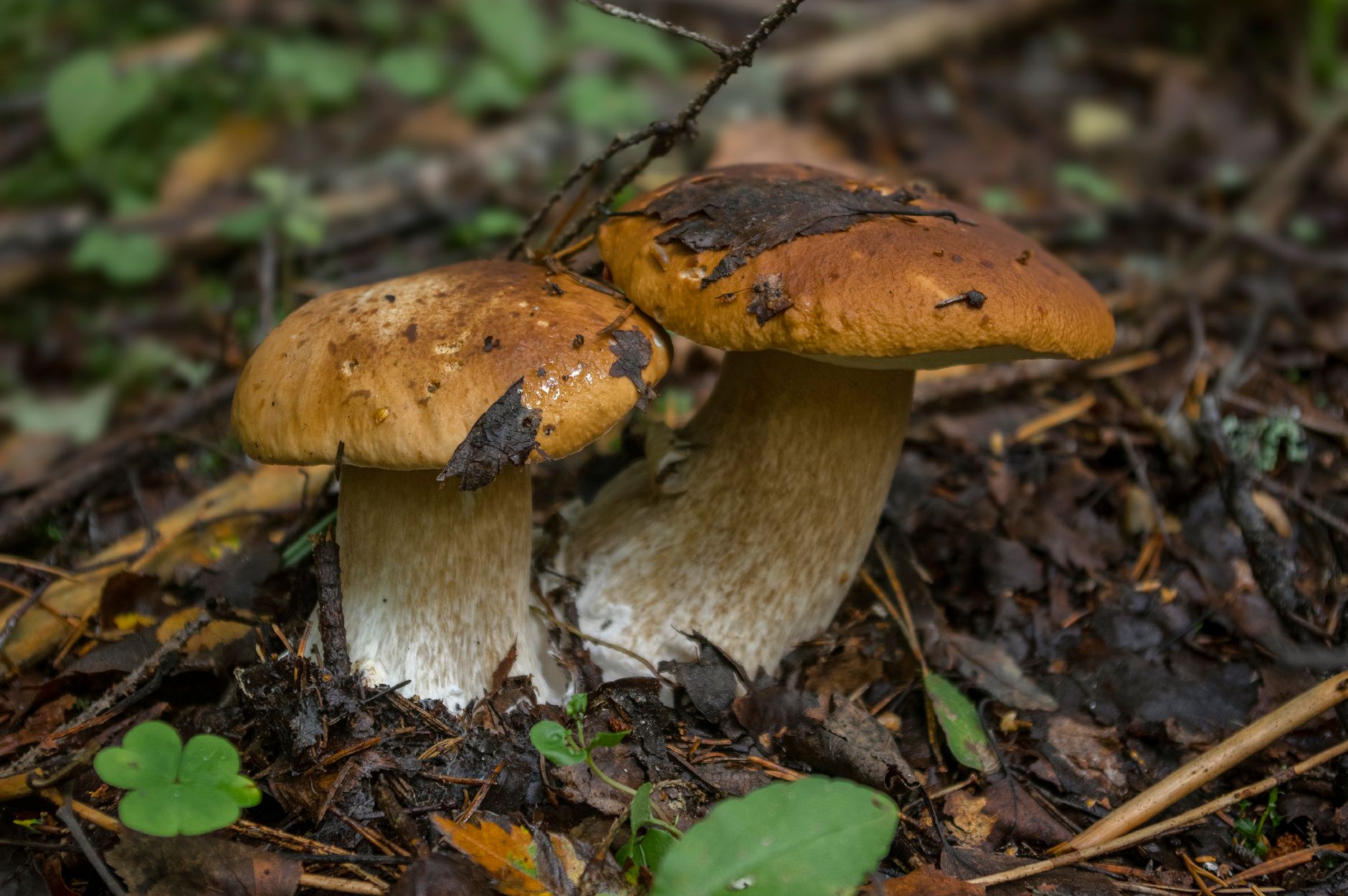
Boletus edulis, widely known as the porcini mushroom, is one of the most prized wild-harvested fungi in the world. Celebrated in Italian, French, and Central European cuisines, porcini has a long history of both culinary and folk medicine use. Beyond its rich, earthy flavor, a growing body of laboratory and analytical research suggests that porcini may offer a meaningful nutritional profile and several bioactive properties worth examining closely.
Nutritional Composition of Porcini
Porcini mushrooms are nutritionally dense relative to their caloric content. They are low in fat and calories while supplying a notable amount of protein, dietary fiber, and a range of vitamins and minerals. Like most edible mushrooms, porcini provide B vitamins including riboflavin (B2), niacin (B3), and pantothenic acid (B5), along with trace minerals such as copper, selenium, potassium, and zinc.
A 2022 narrative review published in Food Chemistry summarized two decades of research on Boletus edulis, noting that it is rich in carbohydrates, proteins, and minerals while remaining low in fat and calories. The same review identified diverse bioactive compounds in porcini, including polysaccharides, phenolic compounds, and phytosterols, and highlighted evidence suggesting antioxidant, anti-inflammatory, and hepatoprotective activities in laboratory models.[1]
Fatty Acid Profile and Cardiovascular Relevance
Porcini mushrooms contain a favorable lipid profile dominated by polyunsaturated fatty acids (PUFAs), particularly linoleic acid. Research evaluating the fatty acid composition of Boletus edulis alongside other wild-harvested European mushrooms found that these species demonstrated low atherogenic and thrombogenic indices, suggesting that regular consumption may be consistent with cardiovascular health goals. The study noted that mushrooms with high PUFA content and favorable lipid indices may be beneficial in the nutrition of individuals managing hypertension or seeking cardiovascular risk reduction strategies, though the authors emphasized that further human clinical trials are needed.[2]
It is worth noting that absolute fat content in porcini remains low, so their contribution to total fatty acid intake is modest. The significance lies more in the quality of the fats present rather than the quantity.
Polysaccharides and Antioxidant Activity
One of the more studied aspects of porcini’s bioactive chemistry is its polysaccharide content. Research has isolated and characterized water-soluble polysaccharide fractions from Boletus edulis, examining their antioxidant behavior in both in vitro and in vivo experimental settings. One laboratory study found that purified polysaccharide fractions from porcini demonstrated free-radical scavenging activity, with certain fractions showing good potential as antioxidant agents in preclinical models.[3]
These findings are consistent with broader research across edible mushroom species, which generally indicates that polysaccharide-rich extracts may support antioxidant defenses. However, most of this work has been conducted in cell culture or animal models. Direct translation to human health outcomes requires further clinical investigation.
Phenolic Compounds and Anti-Inflammatory Potential
Porcini also contains a range of phenolic compounds, including flavonoids and hydroxycinnamic acid derivatives. These compounds are broadly associated with antioxidant and anti-inflammatory activities in the literature. The 2022 review in Food Chemistry specifically identified phenolic compounds as contributing to the anti-inflammatory and antineoplastic activities observed in laboratory extracts of B. edulis.[1]
It is important to contextualize these findings: laboratory demonstrations of anti-inflammatory activity in cell or animal models do not confirm the same effects in humans after digestion and metabolism. Research on the bioavailability of porcini phenolics in human subjects remains limited.
Ergothioneine: A Unique Compound
Porcini mushrooms are among the edible fungi known to contain ergothioneine, a sulfur-containing amino acid that the human body cannot synthesize independently. Ergothioneine accumulates preferentially in tissues subject to oxidative stress and has attracted research interest as a potential cytoprotective agent. While dedicated ergothioneine studies in porcini specifically are limited, broader analyses of edible mushroom species confirm that wild-harvested species like Boletus edulis tend to contain meaningful concentrations of this compound compared to many plant foods.
If the ergothioneine content of functional mushrooms interests you, our article on enoki mushroom’s nutritional profile and emerging health research explores similar themes in another species that has received growing scientific attention.
Umami Compounds and Digestive Considerations
Porcini’s distinctive flavor comes largely from free glutamic acid and 5′-nucleotides, particularly guanosine monophosphate (GMP), which contribute to its intense umami character. These taste-active compounds are not unique health claims, but they are relevant to understanding why dried porcini is used extensively in culinary applications, often in small quantities that nonetheless deliver significant flavor.
From a digestive standpoint, porcini contains dietary fiber including beta-glucans and chitin. Beta-glucans found in various mushroom species have been studied for their prebiotic effects and potential immune-modulatory properties, though species-specific data on porcini beta-glucan content and biological activity in humans remains an area requiring more research.
How Porcini Compares to Other Edible Mushrooms
Within the broader category of wild edible mushrooms, porcini occupies a distinctive nutritional and chemical space. Compared to cultivated species like shiitake or oyster mushrooms, porcini tends to have a higher concentration of flavor-active compounds and a somewhat broader range of phenolic compounds, likely reflecting its mycorrhizal growth habit and exposure to diverse environmental stressors. Cultivated species, by contrast, are more consistent in composition but may lack some of the chemical diversity seen in wild-harvested fungi.
It would be inaccurate to characterize porcini as pharmacologically superior to cultivated functional mushrooms based on available evidence. The research on porcini, while promising in preclinical models, is less extensive than that on species like reishi, lion’s mane, or turkey tail, which have been the subject of more targeted clinical and translational studies.
Practical Considerations for Consumption
Porcini is most commonly consumed dried, powdered, or fresh (in season). Dried porcini is widely available and retains much of its flavor and bioactive chemistry when properly stored. Cooking methods may affect the stability of certain compounds, particularly heat-sensitive phenolics, though porcini is typically consumed in cooked preparations regardless.
Those incorporating porcini into their diet for potential health-related reasons should understand that the available evidence is largely preclinical. No health claims have been approved for porcini mushroom extracts by major regulatory bodies, and the research, while encouraging, does not yet support specific therapeutic applications. As with any dietary change, individuals with existing health conditions or those taking medications should consult a qualified healthcare provider.
References
- 1. Tan Y, Zeng NK, Xu B. Chemical profiles and health-promoting effects of porcini mushroom (Boletus edulis): A narrative review. Food Chem. 2022;390:133199. PMID: 35597089
- 2. Galkowska M, Pietrzak-Fiecko R. Evaluation of the Nutritional and Health Values of Selected Polish Mushrooms Considering Fatty Acid Profiles and Lipid Indices. Molecules. 2022;27(19):6193. PMID: 36234742
- 3. Luo A, et al. Purification, characterization and antioxidant activities in vitro and in vivo of the polysaccharides from Boletus edulis bull. Molecules. 2012;17(7):8079-8090. PMID: 22766800
Disclaimer: The information in this article is for educational purposes only and does not constitute medical advice. Porcini mushroom and its extracts are not approved treatments for any medical condition. Always consult a qualified healthcare professional before making changes to your diet or supplement routine.