
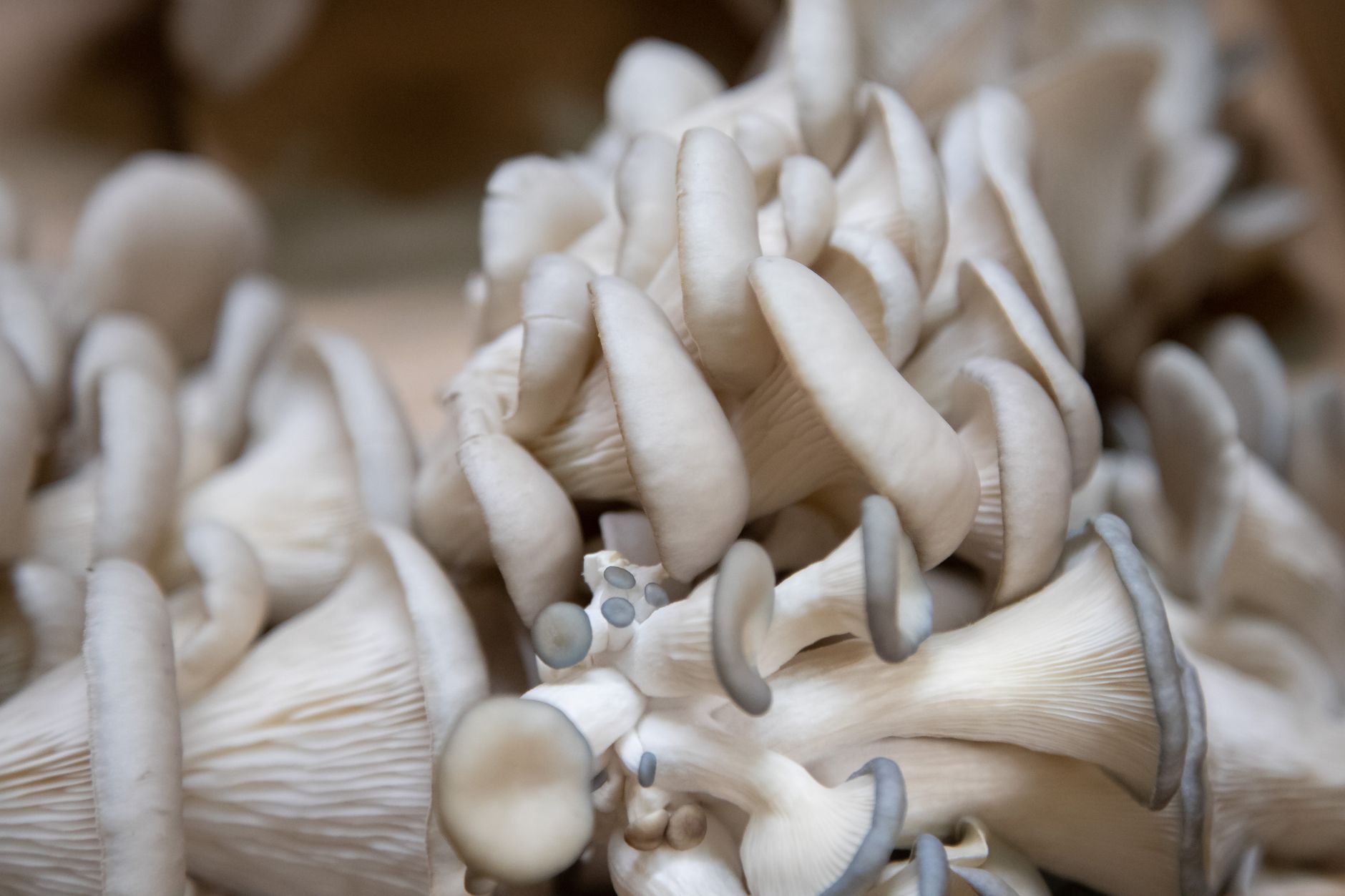
Pleurotus ostreatus, commonly known as the oyster mushroom, is one of the most widely cultivated edible fungi in the world. While it is valued in cuisines across Asia, Europe, and the Americas, a growing body of research suggests that regular consumption may offer benefits that extend well beyond nutrition. From modulating inflammatory pathways to supporting cardiometabolic health, oyster mushrooms have attracted increasing scientific attention over the past two decades.
What Makes Oyster Mushrooms Distinctive?
Oyster mushrooms are characterized by fan-shaped caps ranging in color from pale grey to golden or pink, depending on the variety. They grow in clusters on hardwood trees and are cultivated commercially on a range of agricultural substrates. Nutritionally, oyster mushrooms are relatively low in calories while providing protein, B vitamins, potassium, and dietary fiber. They also contain ergosterol, a fungal sterol that serves as a precursor to vitamin D2 when exposed to ultraviolet light.
Among their bioactive constituents, beta-glucans — branched polysaccharides found in the cell walls — are considered the primary compounds of interest from a health research perspective. These compounds interact with immune receptors and have been studied for their potential to modulate both inflammatory and lipid metabolism pathways.
Anti-Inflammatory Properties: What the Research Shows
One of the more studied aspects of oyster mushroom biology is its apparent ability to influence inflammatory signaling. Research published in Nutrition Journal examined the effects of oyster mushroom concentrate in both cell culture and animal models. The study found that the concentrate suppressed LPS-induced secretion of pro-inflammatory cytokines including TNF-alpha, IL-6, and IL-12p40 in macrophages. This activity was associated with inhibition of two key transcription factors — NF-kappaB and AP-1 — which play central roles in coordinating inflammatory responses.[1]
The same research noted that oral administration of oyster mushroom concentrate markedly reduced TNF-alpha and IL-6 levels in mice challenged with LPS, suggesting the findings may not be limited to in vitro conditions. The authors concluded that oyster mushroom may warrant further clinical study as a dietary agent with anti-inflammatory potential.
It is worth noting that most of this work has been conducted in preclinical settings. Human trials specifically measuring inflammatory markers in response to oyster mushroom intake remain limited, and researchers have called for more robust study designs before firm conclusions can be drawn.
Cardiometabolic Effects: Glucose and Lipid Metabolism
Perhaps the most clinically explored area of oyster mushroom research involves its potential effects on glucose and lipid metabolism. A 2020 systematic review in Nutrients analyzed eight clinical trials examining the effects of Pleurotus ostreatus intake on cardiometabolic parameters. Across these trials, the findings consistently pointed toward improvements in fasting glucose, postprandial glucose, total cholesterol, LDL-cholesterol, and triglycerides in participants who consumed oyster mushrooms.[2]
The review authors noted that the beta-glucan content of oyster mushrooms is thought to be a primary contributor to these effects — beta-glucans form viscous gels in the digestive tract that may slow glucose absorption and interfere with cholesterol reabsorption. However, the review also highlighted that the overall quality of evidence was limited by small sample sizes, high risk of bias, and inconsistent study designs. Blood pressure showed modest reductions in some studies, while body weight remained largely unchanged.
Separately, research examining the dietary fiber fractions of Pleurotus ostreatus found that these fractions modulated the expression of cholesterol-related genes in cellular models in a manner resembling the activity of lipid-lowering drugs, though this was not reflected in corresponding changes in plasma cholesterol in animal studies.[3] Researchers suggested that dose-dependent studies would be necessary to clarify the relationship between intake and metabolic outcomes.
Immune Modulation and Polysaccharide Activity
Beyond direct anti-inflammatory effects, oyster mushroom polysaccharides have been studied for their broader immunomodulatory properties. Beta-glucans interact with pattern recognition receptors on immune cells, including Dectin-1 and certain Toll-like receptors, potentially priming innate immune responses without triggering overt inflammation. Research suggests that these interactions may help support immune readiness — the baseline capacity of the immune system to identify and respond to foreign pathogens.
This mechanism is not unique to oyster mushrooms; it is shared to varying degrees with other functional fungi. For a broader comparison, see our overview of Cordyceps and immune function, which explores how beta-glucan-driven pathways operate across different species.
Nutritional Profile Worth Noting
Outside of its bioactive compounds, oyster mushroom offers a solid nutritional baseline. It contains all nine essential amino acids, making it a relatively complete protein source for a plant-based food. Its fiber content supports gut transit and may contribute to the prebiotic effects observed in the gut microbiome research, though oyster mushrooms are less studied in this context than species like Turkey Tail or Reishi.
Oyster mushrooms are also a moderate source of niacin (B3) and riboflavin (B2), as well as trace minerals including zinc, copper, and selenium. Their ergosterol content can be converted to vitamin D2 through UV exposure, both before and after harvest — a functional property that has been explored as a way to increase the dietary vitamin D contribution of fresh and dried mushrooms.
Considerations and Current Limitations
While the research on oyster mushrooms is encouraging, several important limitations apply. The majority of mechanistic studies have used extracts, concentrates, or isolated fractions rather than whole food consumption under real-world conditions. Bioavailability of key compounds in typical culinary preparations is not well established. The doses used in clinical trials vary considerably, making it difficult to draw conclusions about the amounts relevant to everyday dietary intake.
Oyster mushrooms are generally considered safe for most people and have a long culinary history without reports of significant adverse effects in healthy populations. Individuals with known fungal allergies, those taking immunosuppressant medications, or those managing diabetes with medication should consult a healthcare provider before introducing oyster mushroom supplements, given the potential for additive effects on immune and glucose pathways.
Summary
Oyster mushrooms sit at an interesting intersection of culinary familiarity and emerging scientific interest. Research suggests they may support healthy inflammatory responses, contribute to more favorable cardiometabolic markers, and provide meaningful nutritional value as part of a balanced diet. The evidence is most consistent in the areas of glucose and lipid metabolism, though study quality remains variable. As functional food research matures, oyster mushrooms may prove to be one of the more accessible and broadly applicable edible fungi available to consumers.
References
- 1. Jedinak A, et al. Anti-inflammatory activity of edible oyster mushroom is mediated through the inhibition of NF-kappaB and AP-1 signaling. Nutr J. 2011;10:52. PMID: 21575254
- 2. Dicks L, Ellinger S. Effect of the Intake of Oyster Mushrooms (Pleurotus ostreatus) on Cardiometabolic Parameters — A Systematic Review of Clinical Trials. Nutrients. 2020;12(4):1134. PMID: 32316680
- 3. Caz V, et al. Modulation of Cholesterol-Related Gene Expression by Dietary Fiber Fractions from Edible Mushrooms. J Agric Food Chem. 2015;63(33):7371-80. PMID: 26284928
Disclaimer: The information in this article is intended for educational purposes only and does not constitute medical advice. Oyster mushroom supplements and extracts should not be used as a substitute for professional medical care or treatment. Consult a qualified healthcare provider before making changes to your diet or supplement routine.