Poor sleep is among the most commonly reported health concerns globally, and interest in non-pharmaceutical approaches to sleep support has grown considerably. Functional mushrooms have attracted particular attention in this context, partly because several species feature in traditional medicine systems that explicitly associated them with calming or sleep-promoting properties. Modern researchers have begun investigating the biological mechanisms that might underlie these traditional uses, with results that are instructive even where they remain preliminary.
Why Mushrooms and Sleep? The Biological Basis
Several classes of bioactive compounds found in medicinal mushrooms may be relevant to sleep physiology. These include triterpenes (particularly ganoderic acids found in Ganoderma species), polysaccharides that appear to influence gut microbiota composition, and compounds that may modulate neurotrophic factor signaling. Sleep regulation is a complex neurobiological process involving multiple neurotransmitter systems, including GABAergic, serotonergic, and adenosinergic pathways. Research suggests that certain mushroom compounds may interact with one or more of these pathways, though the evidence varies considerably by species and study type.
It is worth noting at the outset that most existing research uses animal models or small human cohorts, and the field is still some distance from producing robust clinical guidance. What follows is a review of where the evidence currently stands.
Reishi (Ganoderma lucidum): The Most Studied Species
Ganoderma lucidum, commonly known as reishi or lingzhi, is the most extensively researched mushroom in the context of sleep. Its association with calming and restorative properties appears in traditional Chinese medicine texts dating back more than two thousand years.
A 2024 metabolomics study using UPLC-Q-TOF-MS/MS analysis examined five medicinal Polyporales mushrooms, including Ganoderma lucidum, for compounds with sedative-hypnotic activity. The researchers identified six triterpenes shared across all five species that demonstrated sedative-hypnotic effects in mouse pentobarbital sleeping models: four ganoderic acids (B, C1, F and H) and two ganoderenic acids (A and D). This work provided the first pharmacological and chemical justification for the traditional use of these mushrooms in managing insomnia, identifying specific molecular constituents that appear to drive the sleep-relevant effects.[1]
A second line of research examined the sleep-promoting effects of the acidic fraction of a G. lucidum mycelial extract (GLAA) in mice over 28 days. The extract shortened sleep latency and extended sleeping time in pentobarbital-treated animals. Notably, these effects appeared to operate through a gut microbiota-dependent pathway: GLAA administration increased hypothalamic serotonin (5-HT) levels and enriched specific gut bacteria, including Bifidobacterium species, along with metabolites positively correlated with sleeping time. When gut microbiota were eliminated by antibiotics, both the sleep-promoting effect and the associated hypothalamic serotonin changes disappeared. The authors concluded that reishi’s sleep effects may be mediated through a gut-brain axis involving serotonin signaling rather than through a direct central nervous system mechanism.[2]
What This Means for Reishi Supplementation
The mechanistic picture that emerges from reishi research is multifactorial. Triterpenes may exert direct sedative-hypnotic effects, while polysaccharides may support sleep indirectly via gut microbiome modulation and downstream serotonin production. Research also suggests GABAergic signaling involvement, as studies on reishi-containing herbal formulations have found upregulation of GABA-A receptor subunit expression and increased brain GABA levels in animal models. Taken together, these findings suggest that reishi may influence sleep through several complementary mechanisms rather than a single pharmacological target.
Lion’s Mane (Hericium erinaceus): Sleep via Mood and Anxiety Pathways
Hericium erinaceus, or lion’s mane, is most widely studied for cognitive and neurotrophin-related effects. Its relevance to sleep, however, may be indirect: by addressing the anxiety, mood disturbances, and rumination that frequently disrupt sleep onset and quality.
A clinical study enrolled 77 volunteers affected by overweight or obesity who also had documented mood or sleep disorders. Participants received H. erinaceus supplementation for eight weeks alongside a low-calorie diet. At the end of the supplementation period, researchers observed statistically significant reductions in depression, anxiety, and sleep disorder scores. The mushroom appeared to improve both mood disorders of a depressive-anxious nature and the quality of nocturnal rest. The authors also noted increases in circulating pro-BDNF (brain-derived neurotrophic factor precursor) levels, suggesting a potential neurobiological mechanism involving neurotrophic signaling.[3]
This study has several limitations: it was conducted in a specific population (overweight adults with pre-existing mood and sleep disorders under a dietary intervention), making it difficult to generalize findings to the broader population. Nonetheless, it provides human-level evidence that lion’s mane may support sleep-adjacent outcomes in individuals whose sleep difficulties are linked to anxiety or depressive symptoms.
Mechanistic Context for Lion’s Mane and Sleep
Research indicates that H. erinaceus bioactive compounds, particularly hericenones and erinacines, may stimulate NGF (nerve growth factor) synthesis and support serotonergic function. Since serotonin serves as a precursor to melatonin and plays a key role in regulating sleep-wake transitions, these pathways provide a plausible biological basis for the sleep-relevant effects observed in the clinical study above.
Trametes versicolor (Turkey Tail) and Other Polyporales
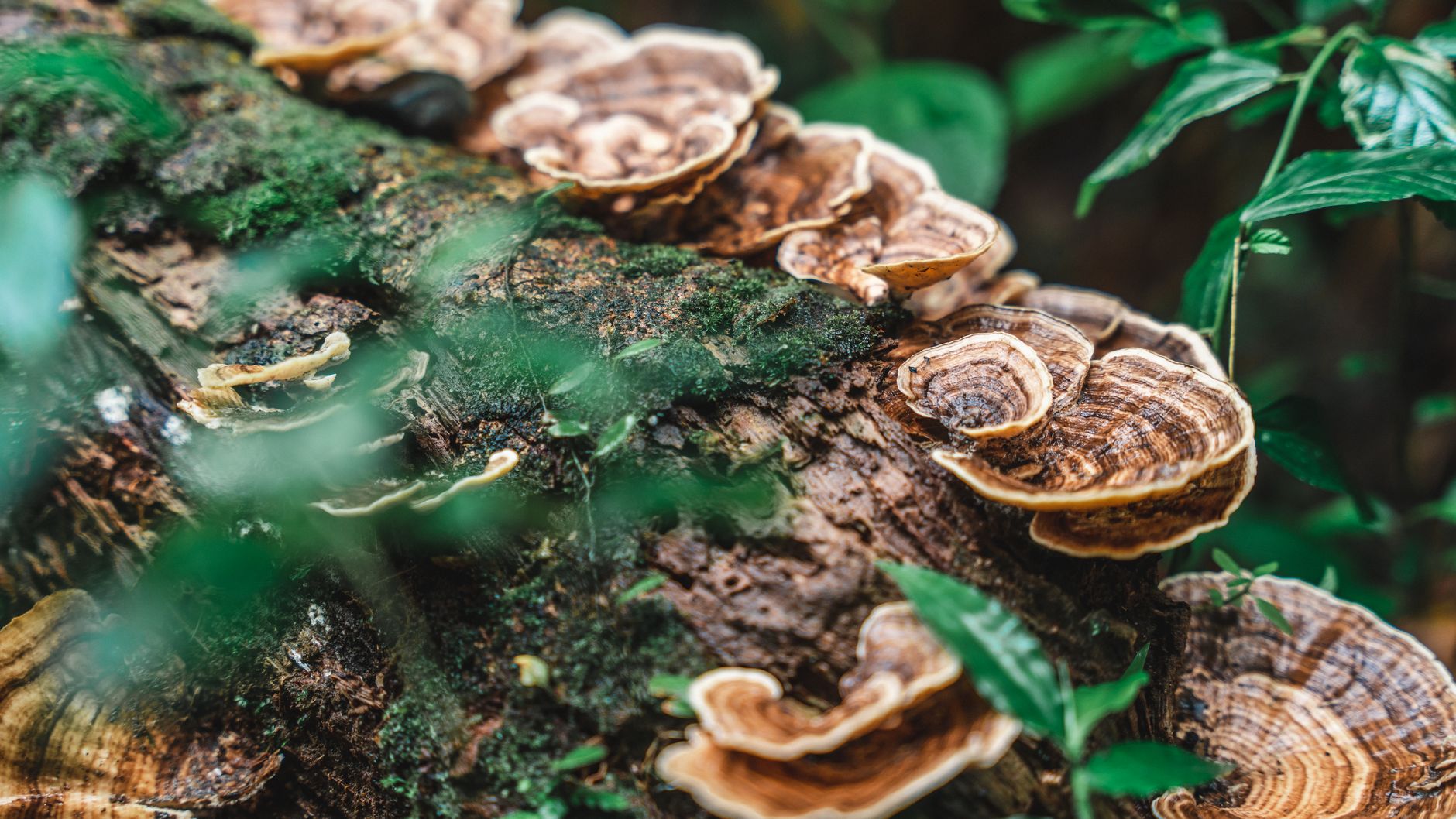
The 2024 metabolomics study mentioned above also found that Trametes versicolor (turkey tail), along with Amauroderma rugosum, G. resinaceum, and G. sinense, shared the same six sedative-hypnotic triterpenes with reishi. While turkey tail is most prominently researched for its immunomodulatory polysaccharide-K (PSK) and gut health effects, the presence of these shared sedative compounds suggests it may have modest sleep-relevant properties that have not yet been studied in isolation.[1] This area requires dedicated clinical investigation before any conclusions can be drawn.
What the Research Does Not Yet Support
Several points of caution are appropriate when interpreting this body of literature:
- Most mechanistic evidence is preclinical. Animal models and in vitro studies generate useful hypotheses but do not establish human clinical outcomes. The lion’s mane human study is a meaningful exception, though it involves a specific population and a confounding dietary intervention.
- Extract standardization matters. The sleep-relevant triterpenes in reishi are concentrated in fruiting body extracts and may be present at lower levels in mycelium-based products. Polysaccharide content also varies substantially between products.
- Sleep disorders have multiple causes. Research suggests functional mushrooms may be most relevant to sleep difficulties linked to anxiety, stress, or gut-brain axis dysregulation, rather than primary sleep disorders with other etiologies.
- Interaction with sedative medications. Individuals taking benzodiazepines, Z-drugs, or other sleep medications should consult a healthcare provider before adding mushroom supplements, as additive sedative effects are theoretically possible.
Comparing the Evidence by Species
When ranking the current sleep-related evidence by species, reishi (Ganoderma lucidum) has the deepest research base, with identified sedative-hypnotic compounds, multiple proposed mechanisms, and converging preclinical findings. Lion’s mane has unique human clinical evidence linking supplementation to improved sleep scores, specifically in individuals with mood-related sleep disruption. Turkey tail and related Polyporales species share relevant triterpene chemistry but lack dedicated sleep research.
For a more detailed look at how reishi’s sleep mechanisms are characterized in the literature, see our in-depth article on Reishi Mushroom for Sleep: What the Research Actually Says.
Practical Considerations
For individuals exploring functional mushrooms as part of a broader sleep hygiene strategy, several factors are worth considering. Extraction method and part of mushroom used affect the compound profile of any given supplement. Hot-water extraction is most commonly used for polysaccharides, while ethanol extraction captures triterpenes more effectively. Dual-extraction products capture both compound classes. For an overview of how to interpret supplement labels in this context, our guide on how to read a mushroom supplement label provides useful background.
Research suggests that consistent use over weeks rather than single doses may be more relevant to the effects observed in studies, though no clinical dosing protocols for sleep have been established in humans.
References
- 1. Chen W, et al. Identification of sedative-hypnotic compounds shared by five medicinal Polyporales mushrooms using UPLC-Q-TOF-MS/MS-based untargeted metabolomics. Phytomedicine. 2024;128:155355. PMID 38555773
- 2. Yao C, et al. Ganoderma lucidum promotes sleep through a gut microbiota-dependent and serotonin-involved pathway in mice. Sci Rep. 2021;11(1):13660. PMID 34211003
- 3. Vigna L, et al. Hericium erinaceus Improves Mood and Sleep Disorders in Patients Affected by Overweight or Obesity: Could Circulating Pro-BDNF and BDNF Be Potential Biomarkers? Evid Based Complement Alternat Med. 2019;2019:7861297. PMID 31118969
Disclaimer: This article is for informational purposes only and does not constitute medical advice. Functional mushroom supplements have not been evaluated by the FDA for the diagnosis, treatment, cure, or prevention of any disease. Consult a qualified healthcare provider before starting any supplement, particularly if you have a diagnosed sleep disorder or are taking medications.