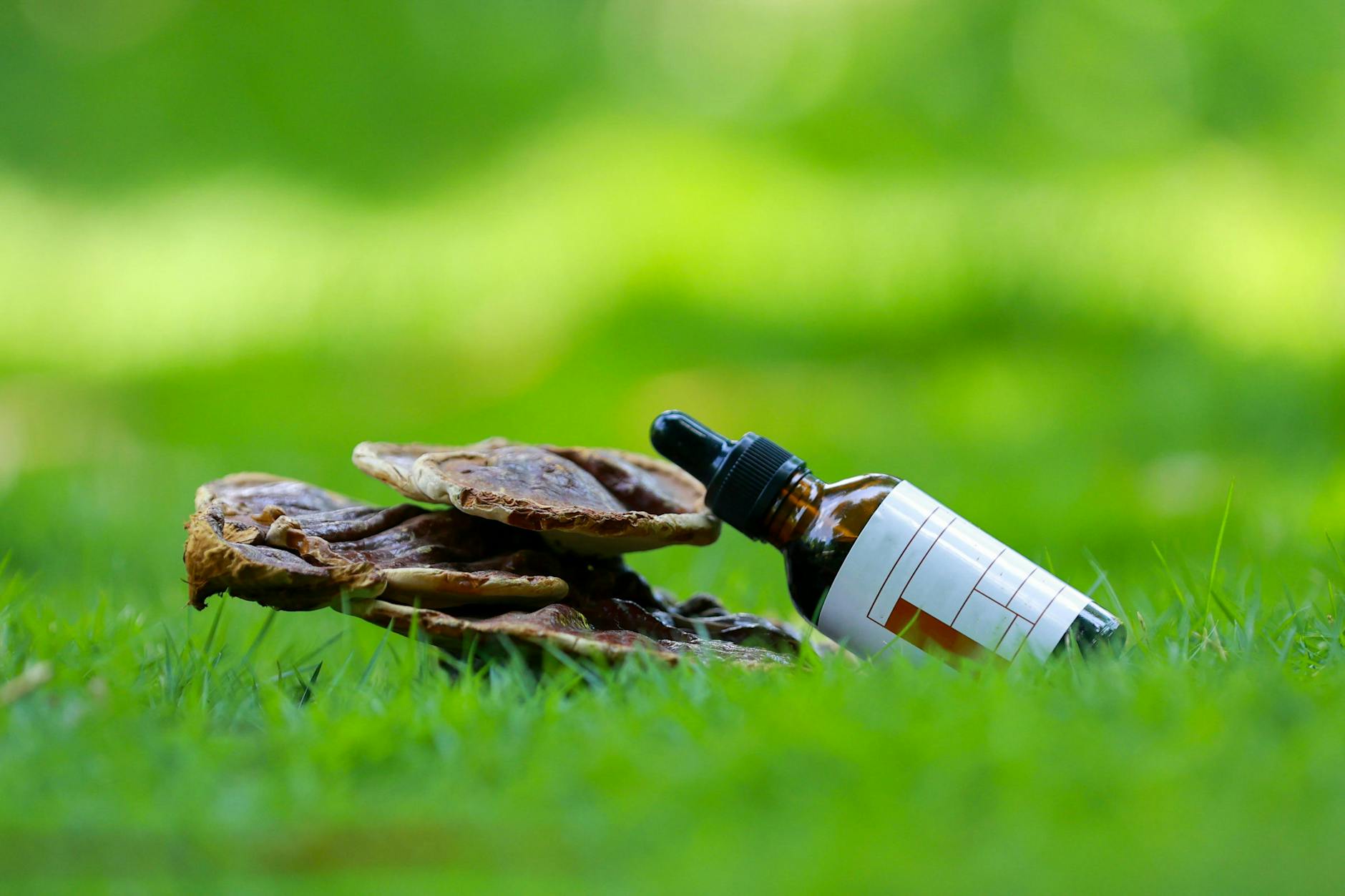
Two names dominate conversations about functional mushrooms: chaga and reishi. Both have centuries of use in traditional medicine, both are now widely available as supplements, and both have earned credible scientific attention. But they are not interchangeable. They work through different mechanisms, target different concerns, and suit different users. This guide breaks down the research so you can make a more informed choice.
What Is Chaga?
Chaga (Inonotus obliquus) is a parasitic fungus that grows primarily on birch trees in cold northern climates, including Siberia, Canada, and Scandinavia. It is not a typical mushroom in appearance: it forms a hard, charcoal-like mass called a conk on the outside of the tree. What lies inside is a dense, orange-brown mass rich in bioactive compounds.
Chaga’s most notable constituents include betulinic acid (derived from birch bark), polyphenols, melanin, and beta-glucans. Its antioxidant density is among the highest measured in any natural substance, which has driven sustained research interest. A 2024 review in Mycology summarized that chaga demonstrates significant antioxidant, anti-inflammatory, and immunomodulatory properties across in vitro and animal studies.[1]
What Is Reishi?
Reishi (Ganoderma lucidum) is a shiny, kidney-shaped mushroom that grows on hardwood trees in humid parts of Asia. Known in China as “lingzhi” and translated loosely as “mushroom of immortality,” it has been used in traditional Chinese medicine for over 2,000 years. Unlike chaga, reishi has a bitter taste and is rarely eaten as food; it is most commonly consumed as an extract, powder, or tincture.
Reishi contains a distinct set of bioactives: triterpenoids (particularly ganoderic acids), polysaccharides, and beta-glucans. Its effects are most associated with immune regulation, stress adaptation, and liver support. A 2025 paper in Current Issues in Molecular Biology highlighted reishi’s polysaccharides and triterpenoids as key drivers of its immunomodulatory and gut-brain axis effects.[2]
How Their Benefits Differ
Antioxidant and Anti-Inflammatory Activity
This is where chaga stands out. Its extraordinarily high ORAC (oxygen radical absorbance capacity) score is largely attributed to its polyphenol and melanin content. Research published in Journal of Traditional and Complementary Medicine in 2021 reviewed decades of data on chaga and concluded that its folk use for conditions linked to oxidative stress, including cancer, diabetes, and infections, has a plausible biochemical basis, though large-scale human trials remain limited.[3]
Reishi also has anti-inflammatory properties, but they are driven more by its triterpene content than raw antioxidant capacity. Ganoderic acids appear to suppress pro-inflammatory cytokines and may modulate the immune response rather than simply neutralizing free radicals.
Immune Support
Both mushrooms offer immune support, but through somewhat different pathways. Chaga’s beta-glucans stimulate innate immunity by activating macrophages and natural killer cells. Reishi also activates innate immunity via beta-glucans, but its triterpenoids add an additional layer by modulating adaptive immune responses, potentially making it more useful in conditions involving immune dysregulation rather than simple immune deficiency.
If your goal is everyday immune maintenance, either mushroom may be sufficient. If you are managing a condition involving inflammation or immune overactivation, reishi’s dual-action profile may be more relevant.
Stress, Sleep, and the Nervous System
Reishi has a stronger case as an adaptogen. Its triterpenoids interact with the central nervous system in ways that may reduce cortisol output and improve sleep quality. Several small human trials have explored reishi’s effects on fatigue and anxiety, with generally positive but modest results. For those dealing with chronic stress or disrupted sleep, reishi is the more studied and more appropriate choice. You can read more about this in our article on Reishi Mushroom and Sleep.
Chaga does not have a meaningful body of research in this area. It is not typically classified as an adaptogen in the strict sense.
Athletic Performance and Muscle Health
An interesting 2023 study published in International Journal of Biological Sciences found that chaga extract supported muscle regeneration and oxidative metabolism in preclinical models, suggesting a potential role in recovery and physical resilience.[4] This is an emerging area, and it remains premature to recommend chaga specifically for athletic performance, but the mechanism is plausible and warrants further investigation.
For direct athletic performance support, Cordyceps remains the more well-studied choice.
Safety and Potential Concerns
Both mushrooms have generally favorable safety profiles in the research, but neither is without caveats.
Chaga is very high in oxalates, which can contribute to kidney stone formation with high or prolonged intake. People with kidney conditions or a history of oxalate stones should exercise caution. It may also interact with anticoagulant medications due to its effect on platelet aggregation.
Reishi can cause mild gastrointestinal discomfort in some users, particularly at higher intakes. Rare cases of liver toxicity have been reported with very high-dose powdered preparations, though this appears uncommon. As with any supplement, consultation with a healthcare provider is advisable, especially for individuals on immunosuppressants or blood thinners.
Supplement Quality: What to Look For
Regardless of which mushroom you choose, quality matters considerably. Key things to check on any product label or certificate of analysis include:
- Beta-glucan percentage: This is the primary bioactive marker for both mushrooms. Look for products that list beta-glucan content directly.
- Fruiting body vs. mycelium: Fruiting body extracts generally contain higher concentrations of the active compounds discussed above. Products made primarily from myceliated grain often have a lower active compound concentration.
- Extraction method: Hot water extraction is suitable for polysaccharides and beta-glucans. Alcohol or dual extraction is preferred for chaga’s polyphenols and reishi’s triterpenoids.
- Third-party testing: Look for certificates of analysis from independent labs verifying potency and freedom from heavy metals and contaminants.
Which One Should You Choose?
There is no universal answer, but some general guidance applies:
- If your primary interest is antioxidant support, immune maintenance, or anti-inflammatory activity: chaga is a reasonable choice, especially if you live in a high-stress oxidative environment or are recovering from illness.
- If your primary interest is stress resilience, sleep quality, or general immune modulation: reishi has more directly relevant human research for these applications.
- If you want both: many supplement formulations combine the two, which is reasonable given their complementary mechanisms.
Neither mushroom is a substitute for conventional treatment of any medical condition. Both are best understood as supportive tools that may enhance baseline health when used consistently alongside sound nutrition and lifestyle habits.
References
- [1] Ern PTY, et al. Therapeutic properties of Inonotus obliquus (Chaga mushroom): A review. Mycology. 2024. PMID: 38813471
- [2] Ren Z, et al. Immunomodulatory Effects of Ganoderma lucidum Bioactive Compounds on Gut-Brain and Gut-Liver Axis Disorders. Curr Issues Mol Biol. 2025. PMID: 41150791
- [3] Szychowski KA, et al. Inonotus obliquus – from folk medicine to clinical use. J Tradit Complement Med. 2021. PMID: 34195023
- [4] Kim TW, et al. Inonotus obliquus upregulates muscle regeneration and augments function through muscle oxidative metabolism. Int J Biol Sci. 2023. PMID: 37781506
This article is for informational purposes only and does not constitute medical advice. Always consult a qualified healthcare provider before starting any supplement.