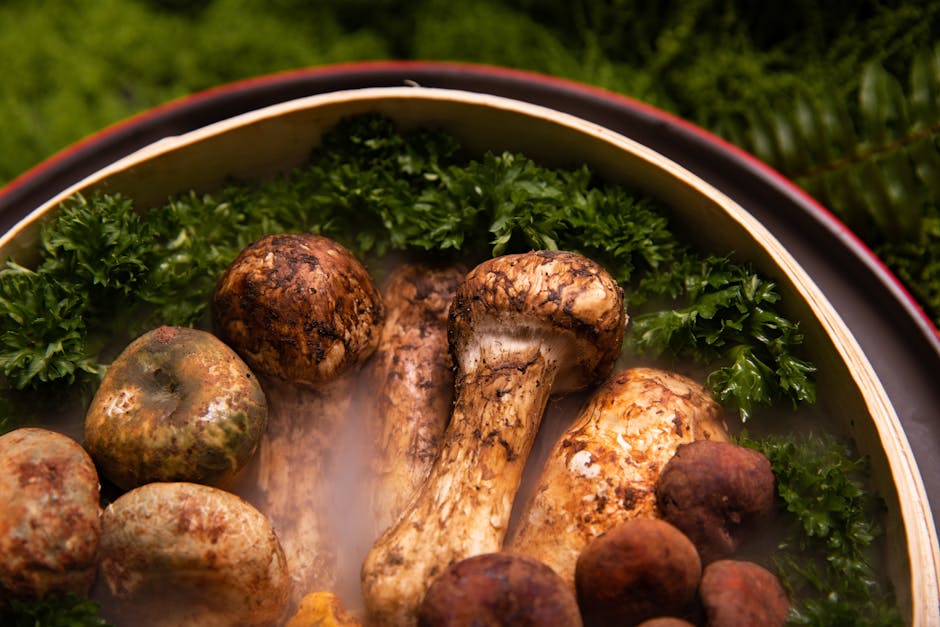
Tricholoma matsutake, commonly known as the matsutake mushroom, occupies a distinctive position in both the culinary world and the emerging field of functional mushroom research. Prized for centuries across Japan, Korea, China, and parts of Scandinavia, matsutake carries a cultural weight that few edible fungi can match. In Japan, it has historically been considered a symbol of autumn, prosperity, and the natural world’s seasonal rhythms. In contemporary science, it is attracting attention for its complex bioactive compound profile and potential contributions to metabolic and immune health. This article examines both dimensions: the mushroom’s deep cultural roots and what modern research is beginning to reveal about its biology.
Cultural and Historical Context
Matsutake’s cultural significance in Japan is difficult to overstate. For much of Japanese history, the mushroom’s aromatic, pine-tinged fragrance made it a treasured seasonal ingredient presented as a gift among nobility and samurai alike. Classical poetry, paintings, and literature from the Heian period onward reference matsutake as a symbol of autumn’s arrival and the transient beauty of nature. For centuries, Japan was self-sufficient in matsutake supply, with the mushrooms harvested from red pine forests that carpeted the country’s hillsides.
That relationship changed dramatically over the twentieth century. Declining pine forest ecosystems, changing land management practices, and soil ecology shifts led to a sharp contraction in Japanese matsutake yields. By the late twentieth century, Japan had gone from a domestic producer to a significant importer, sourcing the mushroom from Korea, China, Canada, and the Pacific Northwest of the United States. This scarcity has only deepened the mushroom’s cultural prestige: in Japan, high-grade matsutake can command prices that place it among the most expensive mushrooms in the world.
In Korea, matsutake (known as songi) carries similarly deep cultural associations. In Scandinavia, particularly Sweden and Finland, closely related species have long been foraged as autumn delicacies. Across these traditions, the common thread is the mushroom’s insistence on wild forest ecologies: unlike oyster mushrooms or shiitake, matsutake has resisted commercial cultivation at scale, preserving its reputation as an irreplaceable product of specific natural ecosystems.
Nutritional and Chemical Composition
A 2023 review published in Critical Reviews in Food Science and Nutrition provides the most comprehensive synthesis to date of matsutake’s chemical profile and reported health effects.[1] The authors document that T. matsutake contains proteins with essential amino acids, fatty acids, nucleic acid derivatives, polysaccharides, minerals, volatile aromatic compounds, phenolic compounds, and steroids. The mushroom’s characteristic fragrance comes primarily from the volatile compound 1-octen-3-ol and methyl cinnamate, which contribute to its distinctive spicy-cinnamon aroma profile.
Beyond aromatic compounds, the polysaccharide fraction has received particular research attention. Matsutake polysaccharides are structurally complex heteropolysaccharides containing arabinose, mannose, glucose, and galactose residues. A 2021 study published in Foods isolated and characterized a novel homogeneous polysaccharide (designated Tmp) from T. matsutake, confirming its complex branched structure and documenting its strong in vitro antioxidant activity.[2] The same study found that Tmp exhibited inhibitory effects on alpha-glucosidase and alpha-amylase, enzymes implicated in post-meal blood sugar regulation, and demonstrated activity in improving glucose consumption in insulin-resistant liver cell lines. These are preliminary in vitro findings and do not constitute evidence of a clinical effect in humans, but they point toward avenues worthy of further investigation.
Antioxidant Properties: What the Research Shows
Multiple studies have examined the antioxidant potential of matsutake polysaccharide fractions using standardized in vitro assays. A 2017 study in the Journal of Zhejiang University: Science B isolated three polysaccharide fractions from T. matsutake fruiting bodies using ultrasonic-assisted extraction and measured their antioxidant capacity via DPPH and hydroxyl radical scavenging assays.[3] The researchers found meaningful variation in antioxidant activity across fractions, with the highest-alcohol-precipitated fraction (TMP80) showing the strongest free radical scavenging capacity, leading the authors to suggest that these fractions represent promising candidates for biomedical applications.
Antioxidant activity in laboratory assays does not automatically translate to clinical benefit in humans: absorption, bioavailability, and metabolic transformation all influence what effect, if any, a dietary compound may have. That said, a consistent antioxidant signal across multiple independently conducted studies does strengthen the case for T. matsutake as a functional food ingredient worthy of continued human research.
Immune-Related and Anticancer Research: Early Signals
The 2023 review in Critical Reviews in Food Science and Nutrition synthesizes two decades of research on T. matsutake’s potential immunomodulatory and anticancer properties.[1] The authors report that bioactive substances in matsutake appear to exert their effects primarily through regulation of immune function and restoration of redox balance. Key molecular pathways identified in preclinical studies include the NF-kB signaling pathway and its downstream cytokines (TNF-alpha, IL-6), as well as MAPK, PI3K-Akt, and JAK-STAT pathways. These pathways are also implicated in cancer cell regulation, which has led researchers to explore matsutake extracts in cancer cell line models.
It is important to interpret these findings carefully. The evidence currently consists largely of in vitro cell studies and animal models. Most investigations have examined inhibition rates in cancer cell lines at defined extract concentrations rather than outcomes in living organisms with intact immune systems. The review’s authors themselves note that more extensive studies focusing on specific molecular mechanisms are needed before conclusions can be drawn about practical anticancer applications in humans. Emerging evidence suggests that matsutake’s bioactive compounds may support normal immune surveillance and cellular redox balance: claims that go considerably further than this are not yet supported by the current research base.
Why Matsutake Is Difficult to Study
One of the complicating factors in matsutake research is the mushroom’s resistance to commercial cultivation. Because matsutake forms an obligate mycorrhizal relationship with specific pine tree species, it cannot be easily grown on sawdust substrate blocks in the way that shiitake or oyster mushrooms are cultivated. This limits the supply of standardized research material and makes it difficult to conduct the large-scale extraction and clinical studies that other functional mushrooms have attracted.
Research is therefore conducted primarily on wild-harvested material or on mycelium grown in submerged liquid fermentation systems, which may not fully replicate the compound profile of a fruiting body grown in its natural forest ecology. This methodological diversity across studies makes direct comparison of results challenging and is one reason the field has not yet produced the volume of human clinical data seen for mushrooms like lion’s mane or reishi. For those interested in how supplement quality is assessed more broadly, our guide to reading a mushroom supplement COA provides context on what to look for when evaluating any functional mushroom product.
Matsutake in Contemporary Wellness Contexts
In supplement form, matsutake is less common than lion’s mane, reishi, or cordyceps, partly because of supply constraints and partly because the research base, while promising, remains earlier-stage. Where it does appear, it is typically as an extract standardized to polysaccharide content, used in formulations targeting immune or metabolic support.
As a whole food, matsutake continues to be used in traditional Japanese medicine as a tonic associated with vitality and longevity, though these traditional uses predate modern evidence standards and should be understood in that context. The intersection of centuries of traditional esteem and modern laboratory investigation positions matsutake as a mushroom that researchers and formulators are watching closely, even if definitive clinical evidence in humans remains a future goal rather than a present reality.
References
- [1] Zhou Y, El-Seedi HR, Xu B. Insights into health promoting effects and myochemical profiles of pine mushroom Tricholoma matsutake. Crit Rev Food Sci Nutr. 2023;63(22):5698-5723. PMID 34985354
- [2] Yang HR, Chen LH, Zeng YJ. Structure, Antioxidant Activity and In Vitro Hypoglycemic Activity of a Polysaccharide Purified from Tricholoma matsutake. Foods. 2021;10(9):2184. PMID 34574294
- [3] Chen Y, et al. Ultrasound extraction optimization, structural features, and antioxidant activity of polysaccharides from Tricholoma matsutake. J Zhejiang Univ Sci B. 2017;18(8):674-684. PMID 28786242
This article is for informational purposes only and does not constitute medical advice. Always consult a qualified healthcare provider before starting any supplement.