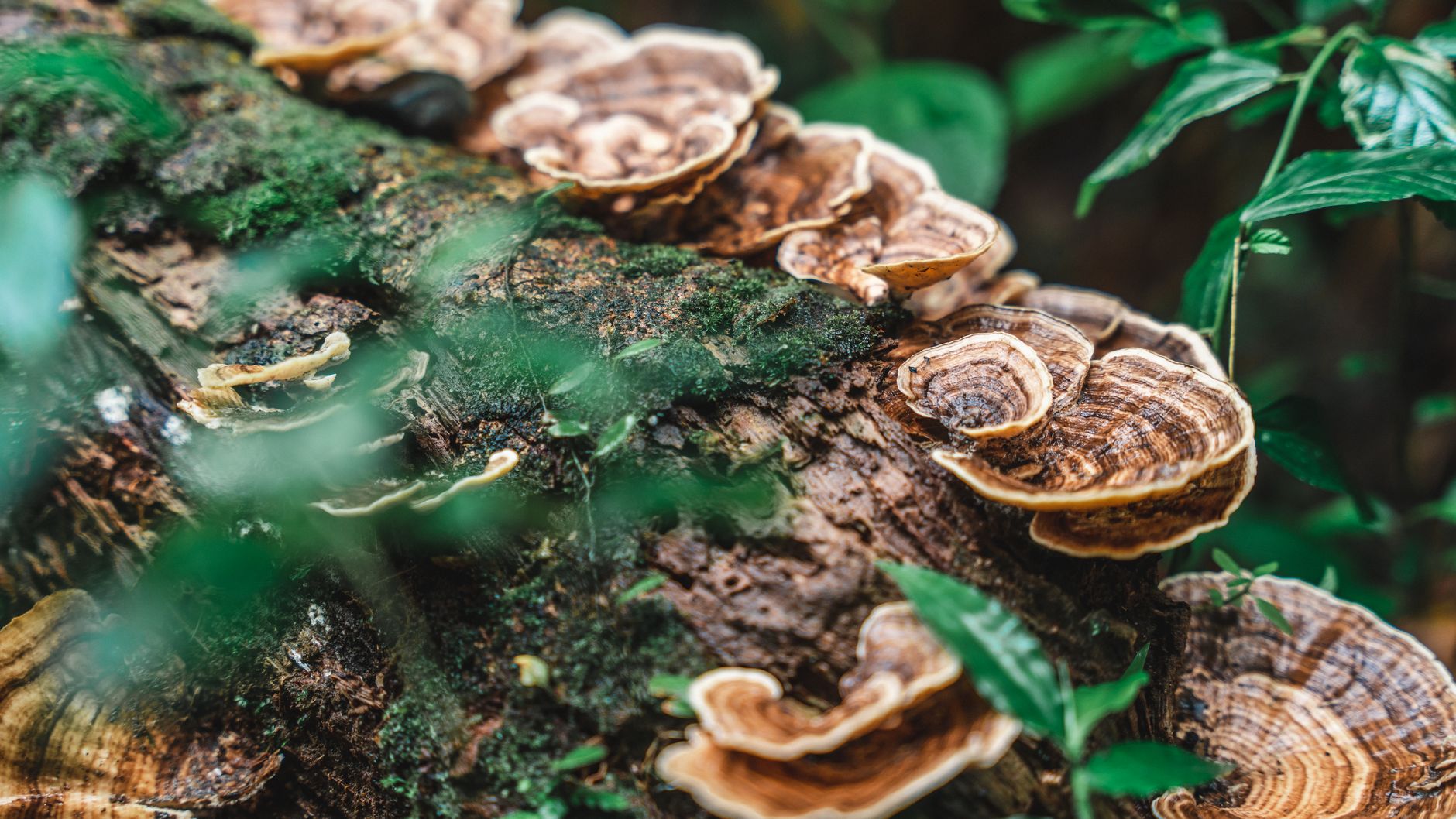
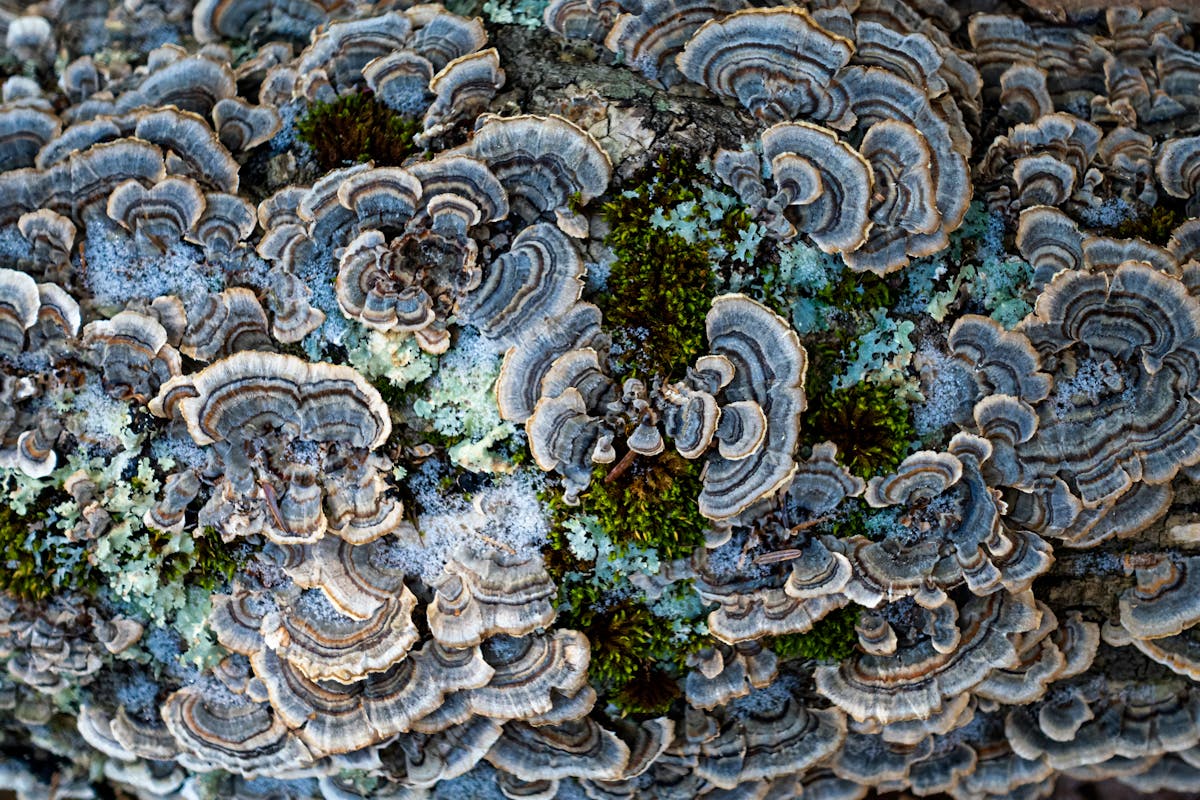
Turkey tail (Trametes versicolor) is one of the most studied medicinal mushrooms in the world. Named for the concentric rings of color on its fan-shaped fruiting body, this polypore grows on dead and decaying hardwood across every continent except Antarctica. While many functional mushrooms remain at the edges of mainstream science, turkey tail has attracted meaningful clinical attention, largely due to two polysaccharide compounds extracted from it: PSK (polysaccharide-K, also called krestin) and PSP (polysaccharide-peptide).
This article breaks down what the research currently shows about turkey tail mushroom, what compounds are thought to drive its effects, and how it fits into the broader landscape of functional mushroom supplementation.
What Is Turkey Tail?
Trametes versicolor belongs to the family Polyporaceae and has been used in traditional Chinese medicine for centuries, where it is known as yun zhi. The fruiting body is typically dried and brewed as a tea or processed into extracts. In modern supplement form, it appears as a capsule, powder, or tincture. The mushroom is not generally consumed as food due to its tough, leathery texture, but its extracts have been used both as traditional tonics and, in some countries, as registered pharmaceutical adjuncts.
The two primary bioactive fractions are:
PSK — a protein-bound polysaccharide developed in Japan and used in oncology settings as an adjunctive agent.
PSP — a polysaccharide-peptide isolated from cultured mycelia of a specific strain, studied more extensively in China and other regions.
PSK and PSP: What the Research Shows
The bulk of clinical research on turkey tail focuses on these two fractions. A comprehensive review published in Biomedicines examined both in vitro, in vivo, and clinical evidence for PSK and PSP, concluding that these compounds appear to operate through both direct effects on cancer cells and immunostimulatory pathways.[1] The review noted that PSK has been studied as an adjunct to standard oncology treatment in Japan since the 1970s, with a number of trials reporting associations with improved survival metrics in certain cancer types when combined with chemotherapy.
It is important to note that these are adjunctive studies — turkey tail extracts are not studied as standalone cancer treatments. The research context is typically supportive care or immune modulation alongside conventional therapy, not replacement of it.
A 2022 Cochrane systematic review examined Coriolus versicolor (a synonym for Trametes versicolor) specifically in the context of colorectal cancer treatment, assessing its potential to reduce adverse effects from chemotherapy and radiotherapy.[2] The review acknowledged the biological plausibility and historical use of the mushroom but noted that higher-quality randomized controlled trials are still needed to draw firm conclusions in this specific context.
Immune Modulation: The Beta-Glucan Connection
Like other functional mushrooms, turkey tail is a source of beta-glucans — complex polysaccharides that interact with immune receptors, particularly Dectin-1 and toll-like receptors on macrophages, dendritic cells, and natural killer cells. Research suggests these interactions may help activate or modulate immune surveillance pathways.[3]
A 2024 study published in International Journal of Biological Macromolecules isolated a novel polysaccharide from Coriolus versicolor and found in preclinical models that it appeared to polarize M2 macrophages (associated with immune suppression in tumor environments) into a pro-inflammatory M1 phenotype.[4] While this research was conducted in laboratory models rather than human trials, it points to a plausible mechanism underlying some of the immunomodulatory effects attributed to turkey tail.
Research also indicates that PSP may stimulate T-lymphocyte proliferation. A 2023 study examining Mexican-sourced Trametes versicolor extracts on human lymphocyte cultures found that aqueous extracts showed the most consistent T-cell proliferative response, suggesting that preparation method and sourcing may influence bioactivity.[5]
Turkey Tail and Gut Health
One emerging area of turkey tail research involves the gut microbiome. PSP has been studied as a prebiotic compound — meaning it may selectively feed beneficial bacterial populations in the intestinal environment. A review in the International Journal of Medicinal Mushrooms summarized evidence suggesting PSP may influence intestinal microbiome composition, with potential downstream effects on immune regulation.[6] This is consistent with broader research on beta-glucans as fermentable substrates for gut bacteria, though human trials in this specific area remain limited.
For a broader look at how turkey tail compares with another well-studied immune mushroom, see our detailed breakdown: Chaga vs Turkey Tail: Head-to-Head Comparison for Immune Support.
Antioxidant Properties
Trametes versicolor contains phenolic compounds, flavonoids, and other secondary metabolites that studies indicate may contribute to antioxidant activity. These compounds are found in both the fruiting body and mycelium. The antioxidant profile of turkey tail is generally considered modest compared to chaga, which is one of the most antioxidant-dense mushrooms documented, but turkey tail’s primary research strength lies in its immune-relevant polysaccharides rather than antioxidant content.
Forms and Supplement Considerations
Turkey tail supplements are available in several forms: whole mushroom powder, hot water extracts, dual extracts (water and alcohol), and isolated PSK or PSP concentrates. The clinical research on PSK and PSP has been conducted using specific, standardized extracts — not whole dried mushroom powder. When evaluating a supplement, beta-glucan content (typically listed as a percentage) is considered a more reliable quality marker than polysaccharide content alone, since polysaccharides can include non-bioactive starches.
Third-party testing for heavy metals and contaminants is particularly relevant for turkey tail, as the mushroom readily absorbs compounds from its growing substrate. Products grown on certified substrates and tested for purity are generally preferred.
Safety Profile
Turkey tail is generally well tolerated in the research literature. The most commonly reported side effects are mild gastrointestinal symptoms, and these are not consistent across studies. However, individuals taking immunosuppressive medications should consult a healthcare provider before using turkey tail, as its immunostimulatory properties could theoretically interact with those treatments. Individuals undergoing chemotherapy should always discuss supplementation with their oncologist.
Summary
Turkey tail mushroom has one of the strongest research bases among functional mushrooms, with its PSK and PSP fractions studied in multiple clinical contexts related to immune support and oncology adjunct therapy. Research suggests it may modulate immune function, influence gut microbiome composition, and interact with macrophage phenotype — though the clinical picture is still developing. As with all functional mushrooms, the quality of the extract and the specificity of the claim being made matter considerably. The evidence supports cautious interest, not certainty.
References
- [1] Habtemariam S. Trametes versicolor Polysaccharides in Cancer Therapy. Biomedicines. 2020;8(5):135. PMID: 32466253
- [2] Pilkington K, et al. Coriolus (Trametes) versicolor mushroom to reduce adverse effects from chemotherapy or radiotherapy in people with colorectal cancer. Cochrane Database Syst Rev. 2022;11:CD012053. PMID: 36445793
- [3] Bains A, et al. Bioactives from Mushroom: Health Attributes and Food Industry Applications. Materials. 2021;14(24):7640. PMID: 34947237
- [4] Bi S, et al. A novel polysaccharide isolated from Coriolus versicolor polarizes M2 macrophages into an M1 phenotype. Int J Biol Macromol. 2024;259(Pt 2):129352. PMID: 38218293
- [5] Salinas-Solis LJ, et al. Detection of Mitogenic and Genotoxic Effects of Turkey Tail Extracts on Human Lymphocyte Cultures. Int J Med Mushrooms. 2023;25(12):33-41. PMID: 37947062
- [6] Wu JM, et al. Recent Advances in Studies of Control of Cancer Stem Cells and the Gut Microbiome by PSP. Int J Med Mushrooms. 2016;18(8):651-660. PMID: 27910783
Disclaimer: This article is for informational purposes only and does not constitute medical advice. Functional mushroom supplements are not intended to diagnose, treat, cure, or prevent any disease. Consult a qualified healthcare provider before starting any new supplement, especially if you have a medical condition or are taking medications.