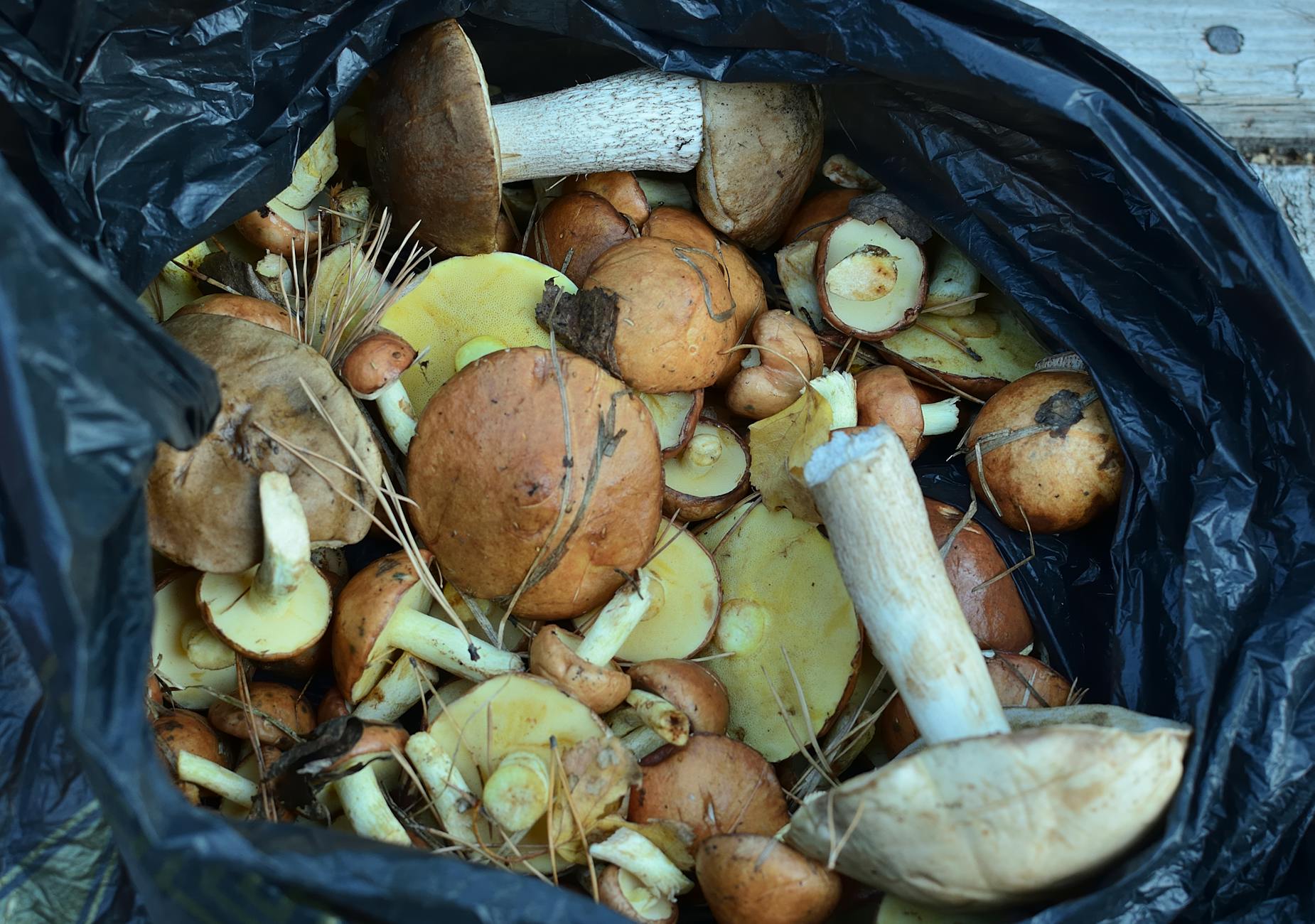
Foraging and consuming wild mushrooms is a practice with deep cultural roots across Asia, Europe, and indigenous communities worldwide. Yet the diversity of fungal species, combined with the existence of toxic lookalikes, makes accurate identification a foundational skill for anyone seeking edible fungi in the wild or trying to understand what they are buying in a supplement form. Scientific research into mushroom morphology, chemical composition, and bioactivity has grown considerably in recent years, offering more rigorous frameworks for species identification and nutritional assessment.
Why Identification Matters: Beyond the Visual
Mushroom identification has historically relied on visual and sensory cues: cap shape, gill structure, spore print color, stem characteristics, and habitat. While these remain central to field identification, modern mycology increasingly incorporates molecular techniques such as DNA barcoding and chemical profiling to verify species identity. A 2025 review published in Foods examined sixteen indigenous wild edible mushroom species, assessing chemical compositions and biological activities, and underscored that nutritional profiles and bioactive compound concentrations can vary substantially between species that may appear superficially similar.[1]
This variation is not merely academic. A mushroom misidentified at the harvest stage carries different beta-glucan concentrations, distinct amino acid profiles, and potentially different pharmacological properties. For consumers of supplements, understanding which species are in a product, and how they were identified, matters for evaluating quality and expected effects.
Key Edible Species and Their Scientific Characteristics
Chanterelles (Cantharellus cibarius)
Chanterelles are among the most prized wild edible mushrooms in European and North American foraging traditions. Identified by their egg-yolk yellow to orange coloration, wavy cap margins, and distinctive false gills (forking ridges that run partially down the stem), chanterelles grow in mycorrhizal association with hardwood and conifer trees. Their primary lookalike, the jack-o-lantern mushroom (Omphalotus olearius), has true gills and typically grows in clusters at the base of trees rather than singly on soil. Chanterelles are a source of beta-glucans, carotenoids, and vitamin D precursors.
Boletus edulis (Porcini / King Bolete)
Boletus edulis, commonly known as porcini or cep, is a robust mushroom with a broad brown cap, a bulbous stem with a fine white net-like pattern (reticulation), and distinctive sponge-like pores rather than gills on the underside. A 2025 study in Molecules assessed Boletus edulis alongside related bolete species and found it exhibited notably high beta-glucan and lycopene content, alongside measurable antioxidant activity, though concentrations varied with environmental conditions including soil composition and geographic location.[2]
Identification caution: the poisonous Boletus satanas (Satan’s bolete) has red pores and a similar form. Any bolete with red pores or flesh that stains blue rapidly when cut should be avoided.
Morels (Morchella spp.)
Morels are among the most distinctively shaped edible mushrooms, featuring a honeycomb-patterned, pitted cap fused directly to a hollow stem. They appear in spring, often near elm, ash, and apple trees. Research published in Critical Reviews in Food Science and Nutrition reviewed the nutritional and phytochemical composition of true morels, finding they contain notable quantities of ergosterol (a vitamin D precursor), polysaccharides with immunostimulatory properties, and phenolic compounds with antioxidant activity.[3]
False morels (Gyromitra spp.) can be confused with true morels but have a brain-like, saddle-shaped cap rather than a true pitted structure, and contain gyromitrin, a toxic compound. Consuming them raw or improperly prepared poses serious health risks.
Oyster Mushrooms (Pleurotus ostreatus)
Oyster mushrooms grow in shelf-like clusters on dead or dying hardwood trees. Their fan-shaped to oyster-shaped caps, white to gray-brown coloration, decurrent white gills, and short or absent stem make them relatively distinctive. They are among the most widely cultivated edible mushrooms globally. Nutritionally, they are recognized for their protein content, beta-glucan content, and the presence of lovastatin, a naturally occurring compound of interest in cardiovascular research.
Lion’s Mane (Hericium erinaceus)
One of the most visually unmistakable edible mushrooms, lion’s mane grows as a white, cascading mass of elongated spines (teeth) on hardwood trees. It lacks gills entirely. Its distinctive morphology makes misidentification rare among common edible species. Considerable research attention has focused on its hericenones and erinacines, compounds that may support nerve growth factor (NGF) synthesis, though clinical evidence in humans remains at an early stage.
The Role of Beta-Glucans Across Species
A common thread across many edible mushrooms is the presence of beta-glucans, a class of polysaccharides found in fungal cell walls. These compounds have been studied for their potential to modulate immune function and are the primary bioactive constituent measured in high-quality functional mushroom supplements. However, beta-glucan content varies considerably across species, growing conditions, and preparation methods. Understanding which species you are working with is foundational to evaluating any health claims associated with a mushroom product. For a deeper look at how beta-glucans function and what to look for on supplement labels, see our article on beta-glucans: the active compound that makes mushrooms so powerful.
Identification Errors and Safety Considerations
Toxicity from wild mushroom consumption is a recurring public health issue in many countries. The most dangerous species belong to the Amanita genus, particularly Amanita phalloides (death cap) and Amanita ocreata (destroying angel). These contain amatoxins that cause delayed, severe liver and kidney damage. They can resemble edible species including paddy straw mushrooms (Volvariella volvacea) to inexperienced foragers.
Key identification markers that apply broadly:
- Always check gill attachment, spore print color, and stem base structure (volva, ring)
- Confirm habitat: species are often mycorrhizally or saprotrophically specific
- Cross-reference multiple physical features, not color alone
- Use regional field guides that account for local lookalikes
- When uncertain, consult an experienced mycologist before consuming
From Field to Supplement: Why Species Identity Still Matters
Most consumers encounter functional mushrooms not in the wild but as powders, capsules, or tinctures. The relevance of species identification extends into the supplement market: product labels may list a common name (e.g., “chaga,” “lion’s mane”) without specifying whether the material is derived from fruiting body, mycelium grown on grain, or a blend. Research suggests that fruiting bodies and myceliated grain substrates differ significantly in their beta-glucan concentrations and bioactive profiles, meaning species and part identification remain relevant even for processed products.
Regulatory standards for mushroom supplement labeling vary by country, and third-party certificate of analysis (COA) verification is currently the most reliable tool available to consumers for confirming species identity and active compound concentrations. Emerging evidence suggests that advances in DNA barcoding technology may eventually allow more granular verification at scale, improving quality assurance throughout the supply chain.
References
- [1] Konsue N, Ketnawa S, Qin S. Indigenous Wild Edible Mushrooms: Unveiling the Chemical Compositions and Health Impacts. Foods. 2025;14(13):2331. https://pubmed.ncbi.nlm.nih.gov/40647082/
- [2] Sotek Z, et al. Bioactive Compounds and Antioxidant Activity of Boletus edulis, Imleria badia, Leccinum scabrum in the Context of Environmental Conditions and Heavy Metals Bioaccumulation. Molecules. 2025;30(15):3277. https://pubmed.ncbi.nlm.nih.gov/40807452/
- [3] Tietel Z, Masaphy S. True morels (Morchella): nutritional and phytochemical composition, health benefits and flavor: A review. Crit Rev Food Sci Nutr. 2018;58(11):1888-1901. https://pubmed.ncbi.nlm.nih.gov/28350213/
This article is for informational purposes only and does not constitute medical advice. Always consult a qualified healthcare provider before starting any supplement.